
The Pre-Mortem: Stoicism for Product Managers
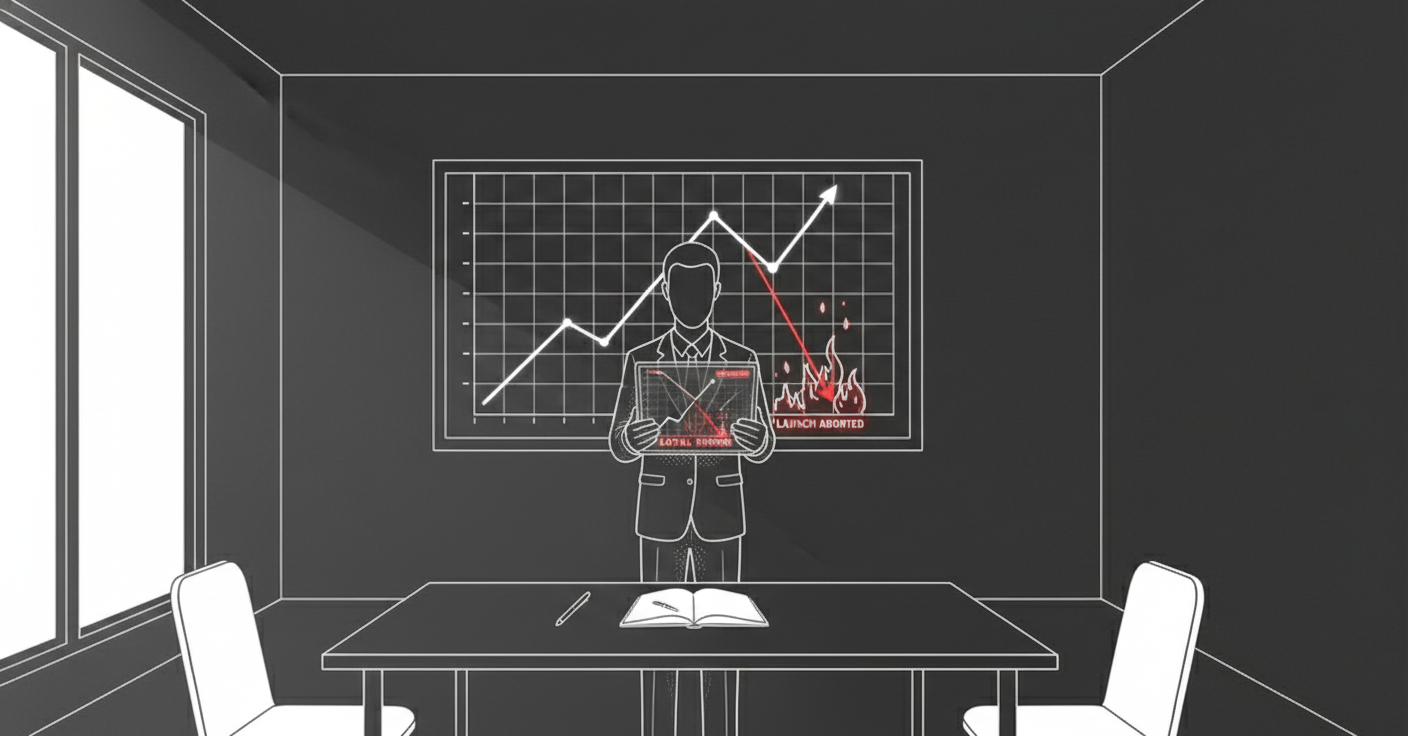
Project Kickoff meetings are dangerous rituals. They are fueled by pizza, caffeine, and a toxic amount of Optimism. The Product Manager presents the roadmap. The Engineers nod at the architecture. The Sales VP is already counting the commission. Everyone agrees: “This is going to work.”
Fast forward 6 months. The project is over budget, the feature is buggy, and no one is using it. The team gathers for the "Post-Mortem" (or Retrospective) to ask: “What went wrong?” By then, it is too late. The money is gone. The trust is broken.
The Chief Wise Officer knows that Optimism is a bug, not a feature. To fix this, we must borrow a technique from the Stoic philosophers and apply it to modern product management. We replace the "Post-Mortem" with the Pre-Mortem.
The Psychology of Failure: Why We Are Blind
Why do smart teams consistently underestimate risk? Nobel laureate Daniel Kahneman attributes this to The Planning Fallacy. When we plan, we naturally imagine the "Happy Path." We visualize the code compiling, the API connecting, and the users clicking. We assume success is the default state. Sextus Empiricus (our current philosopher) would call this Dogmatism, the unfounded belief that the future will align with our desires.
In a Kickoff meeting, if a dissenting engineer raises a hand and says, “I think the database will crash,” they are viewed as "Negative" or "Not a team player." So, they stay silent. The risk remains hidden until it explodes.
The Stoic Solution: Premeditatio Malorum
The Stoics (Seneca, Marcus Aurelius) had a mental exercise called Premeditatio Malorum (The Premeditation of Evils). Every morning, they would visualize the worst possible things happening: “Today, I will be betrayed, I will get sick, my house will burn down.” They didn't do this to be depressed. They did it to be prepared. By visually experiencing the disaster before it happened, they robbed it of its surprise and power.
How to Run a Pre-Mortem (The Algorithm)
In 2007, psychologist Gary Klein formalized this into a business strategy called the Pre-Mortem. Unlike a Risk Assessment (which asks "What might go wrong?"), the Pre-Mortem uses a time-travel trick to force the brain into "Truth Mode."
Step 1: The Time Jump Gather the team. Do not ask them to predict the future. Say this:
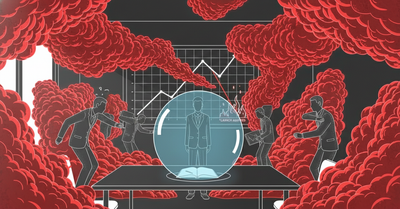
“Imagine we have a crystal ball. It is exactly 6 months from today. The project has launched, and it has been a total disaster. It failed completely. This is a fact.”
Step 2: The Autopsy
“Now, spend 5 minutes writing down the history of why it failed.”
This subtle shift, from "What might happen?" to "It has failed", flips a switch in the brain.
- You are no longer "The Pessimist" attacking the project.
- You are now "The Detective" solving a mystery. Suddenly, the engineer speaks up: “Well, if it failed, it’s probably because the API latency killed the mobile experience.” The Sales VP admits: “It’s because we priced it too high for the mid-market.” The "Happy Path" delusion shatters. The hidden risks pour out onto the whiteboard.
Step 3: The Prevention Now that the "Evils" are visible, you can fix them.
- Risk: "API latency killed us." -> Fix: "Add a caching layer to the Sprint 1 scope."
- Risk: "Pricing was too high." -> Fix: "Run a willingness-to-pay survey before writing any code."
Case Study: The "Unsinkable" Titanic
The Titanic was the ultimate Optimist project. It was "unsinkable," so they didn't carry enough lifeboats. A Pre-Mortem would have saved the Titanic.
- Scenario: "It is April 15, 1912. The ship has sunk. Why?"
- Answer: "We hit an iceberg and didn't have enough boats."
- Action: "Put more boats on the ship. Just in case."
In software, our "lifeboats" are:
- Feature Flags: So we can turn off a buggy feature instantly.
- Rollback Plans: So we can undo a deployment.
- Load Testing: So we know when the server will break.
Conclusion: Pessimism is Strategic
In Corporate Culture, we are trained to be cheerleaders. We are told to "manifest success." The Chief Wise Officer rejects this. Blind optimism is negligence. Strategic Pessimism (The Pre-Mortem) is the highest form of care. By visualizing the death of the project today, you earn the right to keep it alive tomorrow.
Don't wait for the autopsy. Do the Pre-Mortem.
No spam, no sharing to third party. Only you and me.



Member discussion