Lexicon: Techne (τέχνη)
We have too much 'Episteme' (Theory) and not enough 'Techne' (Craft). Why the ancient Greeks believed that true wisdom was found in the hands of the maker, not just the mind of the thinker.
Lexicon: Arete (ἀρετή)
It doesn't just mean "virtue." The Greek concept of Arete means fulfilling your specific purpose. Why a dull knife (and a misaligned employee) has no Arete.
The World as Will and Solitude: Life, Philosophy, and Legacy of Arthur Schopenhauer
"Life swings like a pendulum backward and forward between pain and boredom." From his rivalry with Hegel to his poodle Atma, discover the life of the Sage of Frankfurt and why his philosophy of the "Will" is the ultimate antidote to modern anxiety.
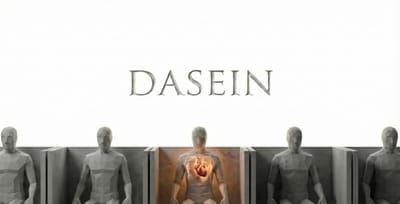
Lexicon: Dasein (Da-sein)
A comprehensive history of "Dasein." Tracing the concept from Heidegger's "Being and Time" to Sartre's "Bad Faith," and how it exposes the dehumanization of modern "Human Resources."
Lexicon: Ma (間)
Why your calendar needs more emptiness. The Japanese concept of Ma teaches us that the music happens in the silence between the notes.
Lexicon: Aporia (ἀπορία)
Why feeling "stuck" is a sign of progress. The Greek concept of Aporia teaches us that admitting ignorance is the only path to true wisdom.
Lexicon: Kairos (καιρός)
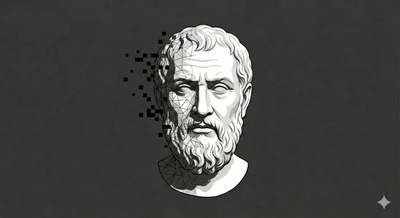
The Greeks had two words for time. Chronos is the clock; Kairos is the opportunity. Why Anaxarchus believed timing was the true measure of wisdom.
Lexicon: Sprezzatura
Stop bragging about how hard you work. The Renaissance concept of Sprezzatura teaches us that true mastery looks effortless.
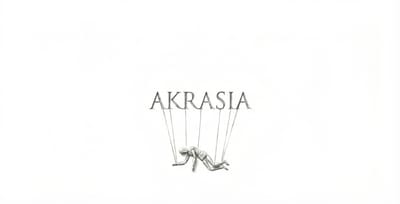
Lexicon: Akrasia (ἀκρασία)
Why do we do what we know is wrong? The Greek concept of Akrasia explains the gap between Strategy (Knowing) and Execution (Doing).
Lexicon: Wu Wei (無為)
Why "Hustle Culture" is inefficient. The Daoist concept of Wu Wei teaches us how to achieve more by doing less forcing.
Lexicon: Amor Fati
Don't just bear the crisis. Love it. Why Nietzsche and the Stoics believed that loving your fate is the ultimate competitive advantage.
Lexicon: Weltanschauung
Why "Mission Statements" fail and why great companies share a fundamental perception of reality. A German lesson for leadership.
Lexicon: Eudaimonia (εὐδαιμονία)
Stop chasing "Hedonia" (Happiness). Start chasing "Eudaimonia" (Flourishing). A Greek lesson for modern management.
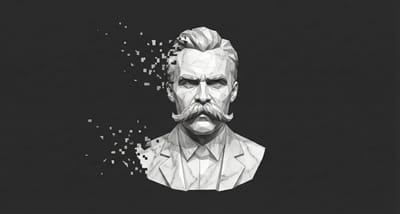
The Physiological Odyssey of Friedrich Nietzsche
How physical suffering and a typewriter shaped Nietzsche's radical philosophy. A biography and complete bibliography, from The Birth of Tragedy to the Turin collapse.
Etymology: The Origin of "Sabotage" and the Myth of the Wooden Shoe
The word "Sabotage" comes from the French "Sabot" (wooden shoe). Why the history of factory resistance explains the passive-aggressiveness in your engineering team today.
Voltaire: Perfect is the Enemy of Good (The Philosophy of Shipping)
"Le mieux est l'ennemi du bien." How Voltaire's philosophy defines the MVP (Minimum Viable Product) and why perfectionism is just procrastination in disguise.
The Genealogy of Doubt: Pyrrho, Anaxarchus, and the Cure for Dogmatism
Trace the origins of Skepticism from the atomic void of Democritus to the court of Alexander the Great. Discover how Pyrrho's "indifference" evolved into a medical cure for the anxiety of truth.
Concept: Moloch — The God of Bad Incentives
Why do good companies do bad things? It's not malice; it's Moloch. Understanding the Game Theory of "Bad Equilibria" and how to fix broken incentives.
Diogenes: The Art of Radical Candor
"I am looking for a human." Why the modern C-Suite needs to stop playing politics and start practicing the ancient virtue of Parrhesia (Fearless Speech).
Concept: The Lindy Effect — Why Old Technology Beats New Technology
Why does SQL outlive every trend? The Lindy Effect states that for ideas, life expectancy increases with age. A guide to choosing "Boring Technology."
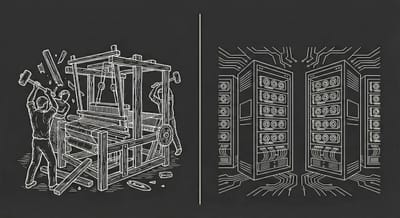
History: The Luddites Were Right — AI and the Automation of Craft
The Luddites weren't anti-technology; they were anti-exploitation. What 19th-century weavers can teach us about Generative AI and the future of coding.
Concept: Cargo Cult Engineering (You Are Not Google)
Why startups mimic Google's tech stack and fail. The lesson of Richard Feynman's "Cargo Cult Science" applied to Kubernetes, Microservices, and Agile.
Sun Tzu: Winning Without Fighting (The Strategy of Asymmetry)
"The supreme art of war is to subdue the enemy without fighting." How to apply Sun Tzu's concept of Asymmetry and positioning to beat larger competitors.
Dunbar’s Number: The Physics of Trust
Why do companies turn bureaucratic at 150 people? It’s not culture; it’s biology. How to apply Robin Dunbar's "Rule of 150" to organizational design.
The Peter Principle: Why Competence is Punished
"In a hierarchy, every employee tends to rise to his level of incompetence." Why your best engineers make the worst managers, and how the Dual-Track ladder fixes it.
Concept: Chesterton’s Fence — The Dangers of "Cleaning Up"
"Don't remove a fence until you know why it was put there." A mental model for handling legacy code and organizational reform without causing disaster.
Ada Lovelace: Poetical Science (The Art of the Polymath)
She was the first programmer, 100 years before the computer. Why modern leaders need "Poetical Science" to bridge the gap between logic and creativity.