
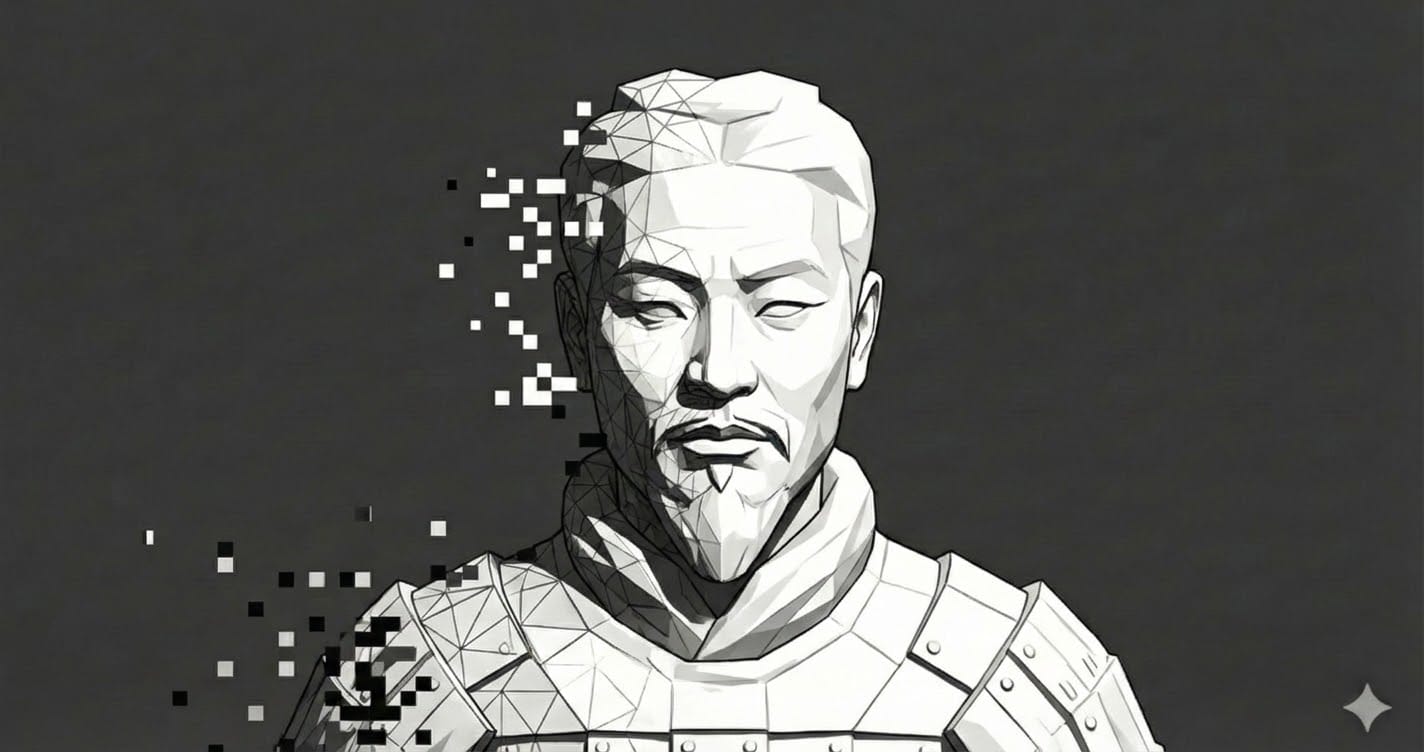
Sun Tzu: Winning Without Fighting (The Strategy of Asymmetry)
In the startup world, we are obsessed with "Disruption." We use violent language. We talk about "killing" the competition, "capturing" the market, and fighting "wars" for talent.
But if you look at the history of warfare, the generals who seek out direct conflict are usually the ones who lose.
Sun Tzu, the legendary strategist from the Eastern Zhou period (c. 5th century BC), wrote The Art of War. It is the most influential strategy text in history, yet it is constantly misunderstood being about fighting.
It is actually a book about avoiding fighting.
His most famous maxim is the antithesis of the "Hustle Culture" mentality:
"The supreme art of war is to subdue the enemy without fighting."
If you are locked in a "Feature War" with a competitor—matching them button for button, price for price—you have already lost. You are fighting a war of attrition. Sun Tzu teaches us a different way: Asymmetry.
1. Avoid Strength, Strike Weakness
Sun Tzu writes:
"Military tactics are like unto water; for water in its natural course runs away from high places and hastens downwards. So in war, the way is to avoid what is strong and to strike at what is weak."
The Executive Lesson: Many startups make the fatal mistake of attacking an incumbent where they are strongest.
- The Mistake: "We will build a better Search Engine than Google." (You are attacking the "High Place." You will die.)
- The Sun Tzu Approach: "Google is strong at Search, but weak at Privacy. We will build a privacy-focused browser (Brave/DuckDuckGo)."
You do not beat Microsoft by building a better Word. You beat Microsoft by building Google Docs (Web-first, collaborative) at a time when Microsoft was obsessed with Desktop files. Find the "Vacuity"—the empty space where the giant cannot go because their own strength prevents them.
2. All Warfare is Based on Deception
"When able to attack, we must seem unable; when using our forces, we must seem inactive."
In tech, "Deception" is not about lying to customers (that is fraud). It is about masking your true intentions from competitors until it is too late.
The Application: If you announce your roadmap to the world, you are handing your battle plan to the enemy.
- The Loud Company: Presses releases every minor update. "We are going to be the Uber of Dog Walking!" (Now Uber knows, and they will crush you).
- The Sun Tzu Company: Stays in "Stealth Mode." They build quietly. They dominate a small niche (e.g., selling books online) while everyone thinks they are just a harmless bookstore. By the time the incumbents realize they are actually building a Logistics Empire (Amazon), the war is already over.
Silence is a strategic weapon.
3. Know the Terrain (Market Positioning)
Sun Tzu devotes entire chapters to "Terrain"—the ground on which you fight.
"If you know the enemy and know yourself, you need not fear the result of a hundred battles."
The "Know Yourself" Audit: Most executives lie to themselves. They think their product is "Revolutionary" when it is merely "Nice to Have."
- Do you actually have a moat?
- Is your team actually "World Class," or are they just expensive?
The "Know the Enemy" Audit:
- What can the competitor not do?
- Example: A large Enterprise competitor cannot offer a low-cost, self-serve product because it would cannibalize their Enterprise Sales team.
- That is the terrain you choose. You launch a self-serve product (PLG). They cannot follow you without destroying their own business model.
4. Speed (The Swift Victory)
"There is no instance of a nation benefitting from prolonged warfare."
Long wars drain the treasury. In business, long development cycles burn the runway. Sun Tzu argues for Speed. Not rushing, but decisive momentum.
The Application: If a project drags on for 18 months, you are in a "prolonged war" with entropy.
- The market changes.
- The team gets tired.
- The budget runs out.
You must strike quickly. Ship the MVP. Close the deal. Pivot. The longer you stay in the "Battlefield" (Development Phase), the more resources you bleed.
Summary
The amateur general looks for a fight. The master general looks for a victory.
If you find yourself constantly worrying about what your competitor is doing, you are playing their game. You are reacting. Sun Tzu teaches us to stop reacting and start positioning.
- Don't fight the Fortress. Flow around it like water.
- Don't announce your plans. Move in silence.
- Don't engage in a war of attrition. Win quickly or move on.
The ultimate victory is when the competitor looks at your market position, realizes they cannot displace you, and decides not to compete at all. You have subdued the enemy without fighting.
No spam, no sharing to third party. Only you and me.




Member discussion