
The Burden of Proof in Strategy

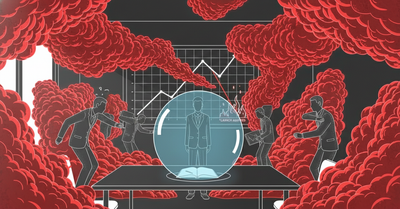
Imagine a familiar scene in the corporate boardroom. A charismatic VP stands up and pitches a massive, disruptive initiative. Maybe it is a complete restructuring of the sales organization. Maybe it is pivoting the entire product roadmap to "Web3" or "Generative AI."
They have a slick 40-slide deck. They use words like "synergy," "paradigm shift," and "first-mover advantage." The Chief Financial Officer looks at the $5 million price tag and frowns. "I'm not sure this is going to work," the CFO says. "Do we have evidence that our customers actually want this?"
The VP smiles confidently and deploys the most dangerous sentence in corporate strategy: "We can't afford to be left behind. Can you prove to me that this won't work?"
The room goes quiet. The CFO cannot mathematically prove that the future won't unfold exactly as the VP claims. Because the CFO cannot prove a negative, the CEO greenlights the project. Two years later, the $5 million is gone, the product is dead, and the VP has moved on to another company.
This organization just fell victim to a catastrophic logical error. They misplaced the Burden of Proof.
To understand why this happens, and how to stop it, the Chief Wise Officer must understand the concept of Russell’s Teapot.
The Unfalsifiable Teapot
In 1952, Bertrand Russell wrote an article addressing the debate over religious dogma, but his logic applies perfectly to corporate strategy.
Russell proposed a thought experiment: Imagine he claimed that right now, orbiting the sun somewhere between the Earth and Mars, there is a tiny, antique china teapot. He adds a caveat: The teapot is far too small to be detected by even our most powerful telescopes.
Russell then states: "Because my assertion cannot be disproved, it is an intolerable presumption on the part of human reason to doubt it."
Of course, this is absurd. No rational person would believe in the orbital teapot just because they can't prove it isn't there. Russell’s point was simple but profound: The burden of proof always lies upon a person making an unfalsifiable claim, not upon the skeptic to disprove it.
The "Teapot Projects" of the Corporate World
Every large organization is drowning in "Teapot Projects." These are initiatives built on grand, unprovable assertions.
- "A rebrand will definitely double our inbound pipeline."
- "Mandating a return-to-office will fix our culture."
- "Acquiring this failing competitor will give us unprecedented market synergy."
Because these claims are about a highly complex future, they are effectively invisible to telescopes. They cannot be definitively disproven in the present moment.
When a culture is driven by FOMO (Fear Of Missing Out) or the HiPPO (Highest Paid Person's Opinion), the burden of proof violently shifts. The organization defaults to action rather than reason. The skeptics are labeled as "blockers" or "lacking vision" because they cannot definitively prove the teapot doesn't exist.
And so, the company launches rockets to go look for it.
The CWO Strategy: Defending the Burden
The Chief Wise Officer is the gatekeeper of logic. When a Teapot Project is pitched, your job is not to prove it will fail. Your job is to hand the burden of proof back to the person pitching it.
Here is how to enforce it:
1. The Default State is "Do Nothing" (The Null Hypothesis) In science, the "Null Hypothesis" assumes that there is no relationship between two variables until proven otherwise. In business, the Null Hypothesis is that the status quo remains until evidence justifies the cost of change. Change requires capital, time, and focus. The default answer to any new initiative should be "No." The person proposing the change must provide overwhelming, verifiable evidence to move the needle to "Yes."
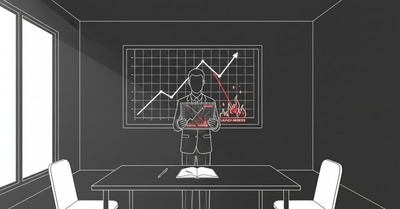
2. The Falsifiability Test Before funding a project, ask the sponsor: "What specific data would prove to you that this project is a failure?" If they cannot give you a measurable, concrete metric, if they say things like, "It's about brand awareness, which is hard to measure", they are pitching a Teapot. If a project cannot be mathematically failed, it cannot be strategically funded.
3. The Miniature Rocket (Pilot Programs) Sometimes, the only way to get evidence for a radically new idea is to test it. But you do not need to risk the entire company to do so. If a VP is convinced the teapot is out there, do not give them $5 million and two years. Give them $50,000 and two weeks. Force them to build a low-fidelity prototype or run a localized A/B test. Make them bring back a shard of porcelain before you fund the whole mission.
Conclusion: The Courage to Doubt
In a hyper-competitive market, leaders are terrified of looking stagnant. There is immense pressure to "just do something." But motion is not progress, and dogma is not strategy.
Millions of dollars are burned every quarter because executives are too timid to say, "I am not going to fund this just because I can't prove it will fail."
Be the skeptic in the room. When someone points to the empty sky and promises you a teapot, do not apologize for lacking a telescope. Simply ask them to bring you the tea.
No spam, no sharing to third party. Only you and me.


Member discussion