
Conatus: The Unstoppable Will to Persist in Business
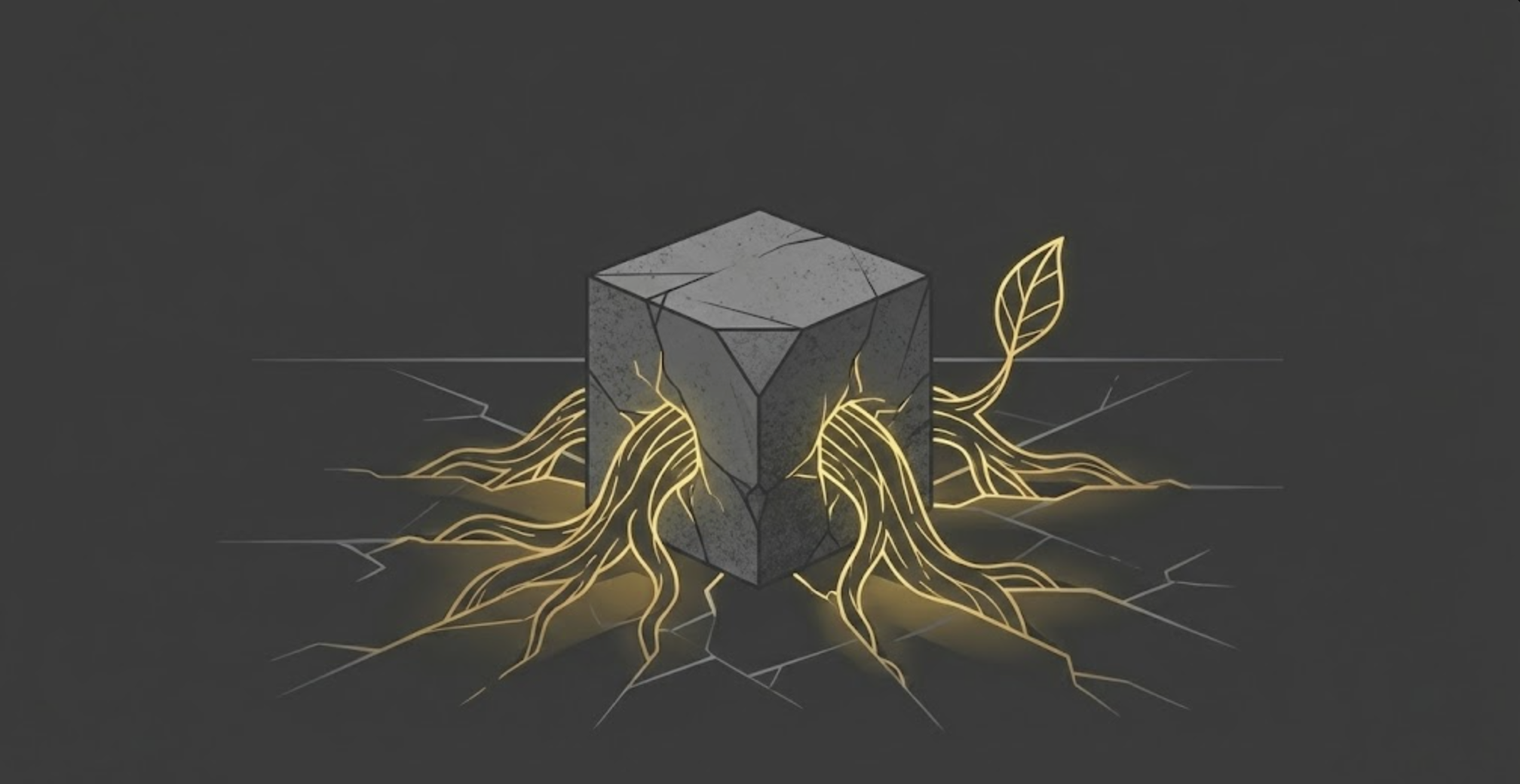
Note: We often treat companies like machines: "If I pull this lever (Budget), the machine will stop." But any Chief Wise Officer knows that companies are not machines; they are organisms. Baruch Spinoza gave us the law of Conatus, the unstoppable drive of every being to persist in its own existence. This explains why "Zombie Projects" refuse to die and why departments fight for relevance. It is not insubordination; it is the physics of life.
In Part III of The Ethics, Spinoza introduces a concept that predates evolutionary biology by two centuries:
"Each thing, as far as it can by its own power, strives to persevere in its being."
He called this Conatus (from the Latin conari, to try or endeavor). For the Chief Wise Officer, this is the fundamental law of organizational dynamics. A rock resists being broken. A wolf resists being caught. A Marketing Department resists being downsized. To exist is to struggle against non-existence.
When we look at our organizations through the lens of Conatus, the "irrational" behavior of our colleagues suddenly becomes mathematically predictable.
The Conatus of the "Zombie Project"
The CFO looks at a failing project and sees a "Sunk Cost." The Chief Wise Officer looks at the same project and sees a Conatus. Once a project team is formed, it becomes a living entity. It wants to survive.
- It will create new "milestones" to justify its existence.
- It will hide negative data.
- It will pivot its mission just to stay funded.
This is not malice. It is the biological imperative of the group. The team members have linked their professional Conatus (their identity, their salary, their status) to the project’s survival. To kill the project is to attack their very being. Wisdom lies in recognizing that you are not debating logic; you are threatening life.
The Clash of Vectors
Spinoza views the world as a geometric grid of opposing forces. In a corporation, every department has its own Conatus.
- Sales Conatus: Maximize revenue (often by promising features that don't exist).
- Engineering Conatus: Maximize stability (often by refusing to build new features).
When these two forces collide, the CEO sees "conflict." The Wise Officer sees Physics. If the Conatus of the part (the Department) becomes stronger than the Conatus of the whole (the Company), the organism gets cancer. The cells grow for their own sake, killing the host. The role of the CWO is not to "mediate" but to align the vectors. You must demonstrate that the only way for the Engineering Conatus to flourish is for the Sales Conatus to succeed, and vice versa.
Desire: The Essence of the Employee
Spinoza famously wrote: "Desire is the very essence of man." We are not thinking machines that feel; we are feeling machines that think. Our Conatus manifests as Desire, the desire to act, to build, to influence.
- Joy (Laetitia): The feeling when our power to act increases.
- Sadness (Tristitia): The feeling when our power to act is blocked.
The Anatomy of "Quiet Quitting"
"Quiet Quitting" is a Spinozist tragedy. It happens when an employee’s Conatus is repeatedly blocked by the environment.
- They try to innovate -> Compliance says No.
- They try to speak up -> Management ignores them. Every "No" is a reduction in their power (Potentia). Eventually, to preserve their remaining energy, they withdraw. They stop striving. They enter a state of "Minimum Viable Existence." The Wise Officer knows that you cannot "motivate" this person with a pizza party. You can only motivate them by removing the obstacles to their Conatus.
The Wise Officer's Strategy
1. The Art of the "Good Death"
When a project must die, the CWO does not just cut the budget. That triggers a survival fight. Instead, you must decouple the Conatus of the people from the Conatus of the project. "The project is ending, but your 'striving' is being transferred to this new, higher-value mission." You must show that the death of the project is necessary for the survival of the team.
2. Measuring Potentia, Not Just output
Standard KPIs measure output (widgets made). Spinozist KPIs measure Potentia (Capacity to act).
- Is your team feeling more powerful today than yesterday?
- Do they have more agency? A company where the collective Potentia is rising is unstoppable. A company where it is falling is just waiting to die.
3. The Corporate Conatus
Finally, the Wise Officer tends to the Conatus of the Company itself. Does the company still have the "Will to Persist"? Or is it just coasting on momentum? When a company forgets its purpose (its reason for striving), its Conatus weakens. It becomes fragile. It may still have money (resources), but it has lost its force. Your job is to keep the fire of striving alive.
No spam, no sharing to third party. Only you and me.

Member discussion