Bad Faith and the Danger of "I Had No Choice"
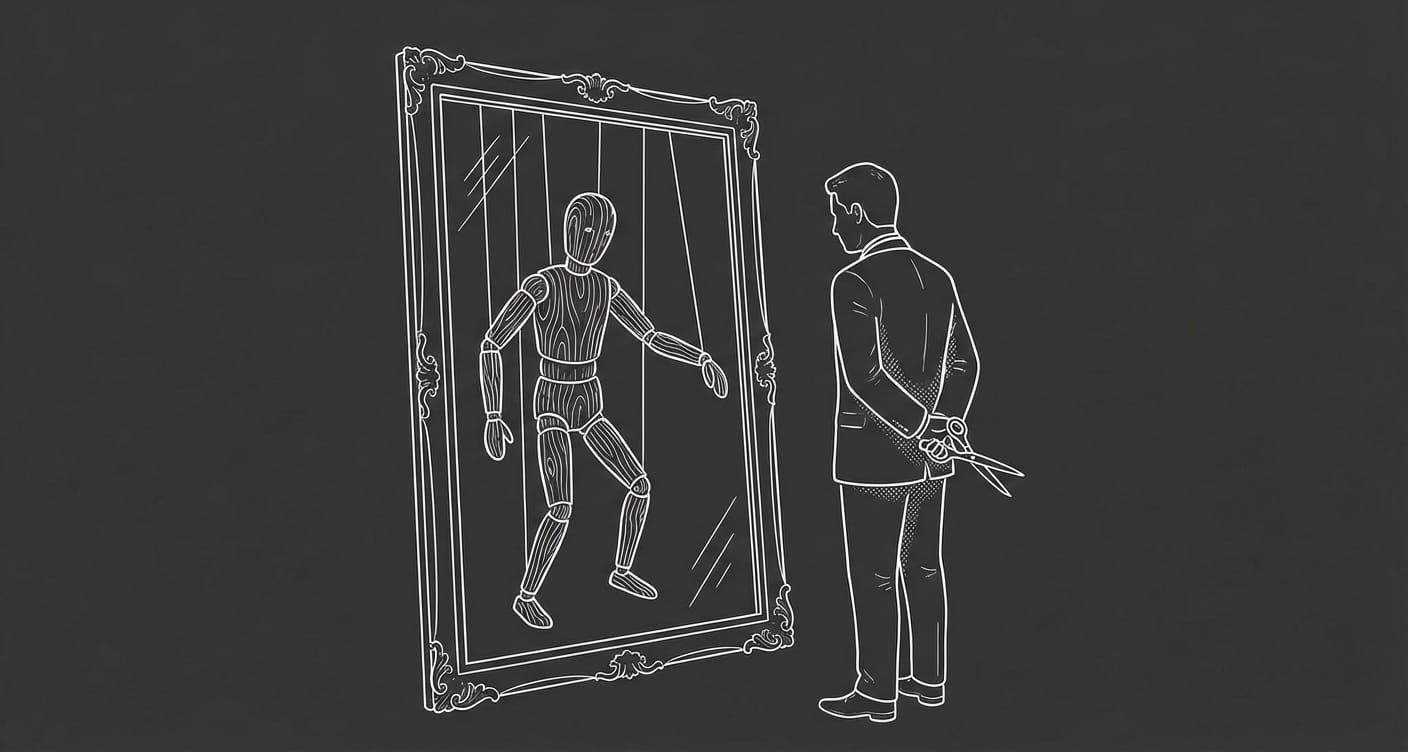
Note: How often have you heard a leader say, "My hands are tied," or "The market forced our hand"? It sounds reasonable. It sounds safe. But Jean-Paul Sartre calls this Bad Faith (Mauvaise Foi). It is a philosophical lie we tell ourselves to escape the terrifying weight of our own freedom. The Chief Wise Officer knows that the moment a leader claims they have "no choice," they have stopped leading and started acting.
Imagine a waiter in a Parisian café. He moves a little too quickly. His voice is a little too eager. He balances the tray with a flourish that seems robotic. Sartre watched this waiter and realized: He is playing a game. He is trying to convince himself (and you) that he is a Waiter in the same way a rock is a rock. He wants to merge with his function. He wants to be an object. Why? Because if he admits he is a Man playing the role of a waiter, he has to admit that he could drop the tray, walk out the door, and change his life at any moment. That freedom is dizzying. So, he hides in the role.
Sartre called this Bad Faith (Mauvaise Foi). It is the act of lying to oneself to escape the burden of freedom.
The Corporate "Waiter"
Walk into any boardroom, and you will see the Waiter.
- The "Suit": The executive who speaks only in buzzwords ("Synergy," "Drill down"). They have dissolved their personality into their title.
- The "Good Soldier": The manager who implements a cruel policy and says, "Don't shoot the messenger. I’m just following orders."
These people are in Bad Faith. They are pretending that their Facticity (their job description, their boss's orders) determines their actions. They are pretending they are objects pushed by external forces. But they are lying. They are choosing to follow orders. They are choosing to stay in the room. They are choosing the job.
The Most Dangerous Phrase in Business
The hallmark of Bad Faith is the phrase: "I had no choice."
- "We had to cut R&D. The market gave us no choice."
- "I had to fire Bob. HR policy gave me no choice."
Sartre would argue: You always have a choice. You could have resigned. You could have fought the policy. You could have ignored the market and taken the loss. Those choices might have had terrible consequences (getting fired, going bankrupt), but they were choices. When you say "I had no choice," you are essentially saying: "I did not want to pay the price of the alternative, so I pretended the alternative did not exist."
Why Leaders Must Reject Bad Faith
Why does this philosophical distinction matter? Because Bad Faith creates weak cultures.
1. It destroys accountability. If the CEO "had no choice" but to cut costs, then the CEO is not responsible for the pain caused. The "Market" is responsible. The "Market" is a ghost. You cannot hold a ghost accountable. When leaders abdicate agency, the organization becomes a drift-boat with no captain.
2. It creates "Zombie" employees. If a manager acts like the robotic Waiter, their team will treat them like a robot. Trust evaporates. People follow humans; they do not follow job descriptions. Authentic leadership requires the vulnerability of admitting, "I am choosing to do this difficult thing because I believe it is the right path," rather than hiding behind "HQ told me to."
3. It blinds you to options. When you convince yourself you have no choice, you stop looking for creative solutions. You accept the "binary" (Fire Bob vs. Keep Bob) and miss the third option (Retrain Bob). Authenticity opens the mind; Bad Faith closes it.
The Audit: Are You in Bad Faith?
The Chief Wise Officer encourages leaders to audit their own language for Bad Faith.
The Test: Whenever you feel the urge to say "I have to...", replace it with "I choose to..." and see how it feels.
- Bad Faith: "I have to go to this boring meeting." (Victim).
- Authenticity: "I choose to go to this boring meeting because I want to keep my project funded." (Owner).
- Bad Faith: "We had to lay off 10% of the staff." (Victim).
- Authenticity: "We chose to lay off 10% of the staff to save the company from bankruptcy." (Owner).
The second version is heavier. It carries a moral weight. It might make you feel guilty. Good. That guilt is the proof of your freedom. A rock feels no guilt. A robot feels no guilt. Only a free human feels the weight of their actions. Shoulder the weight. That is what you are paid for.
No spam, no sharing to third party. Only you and me.
Member discussion