
Master vs. Slave Morality (The Ethics of Leadership)
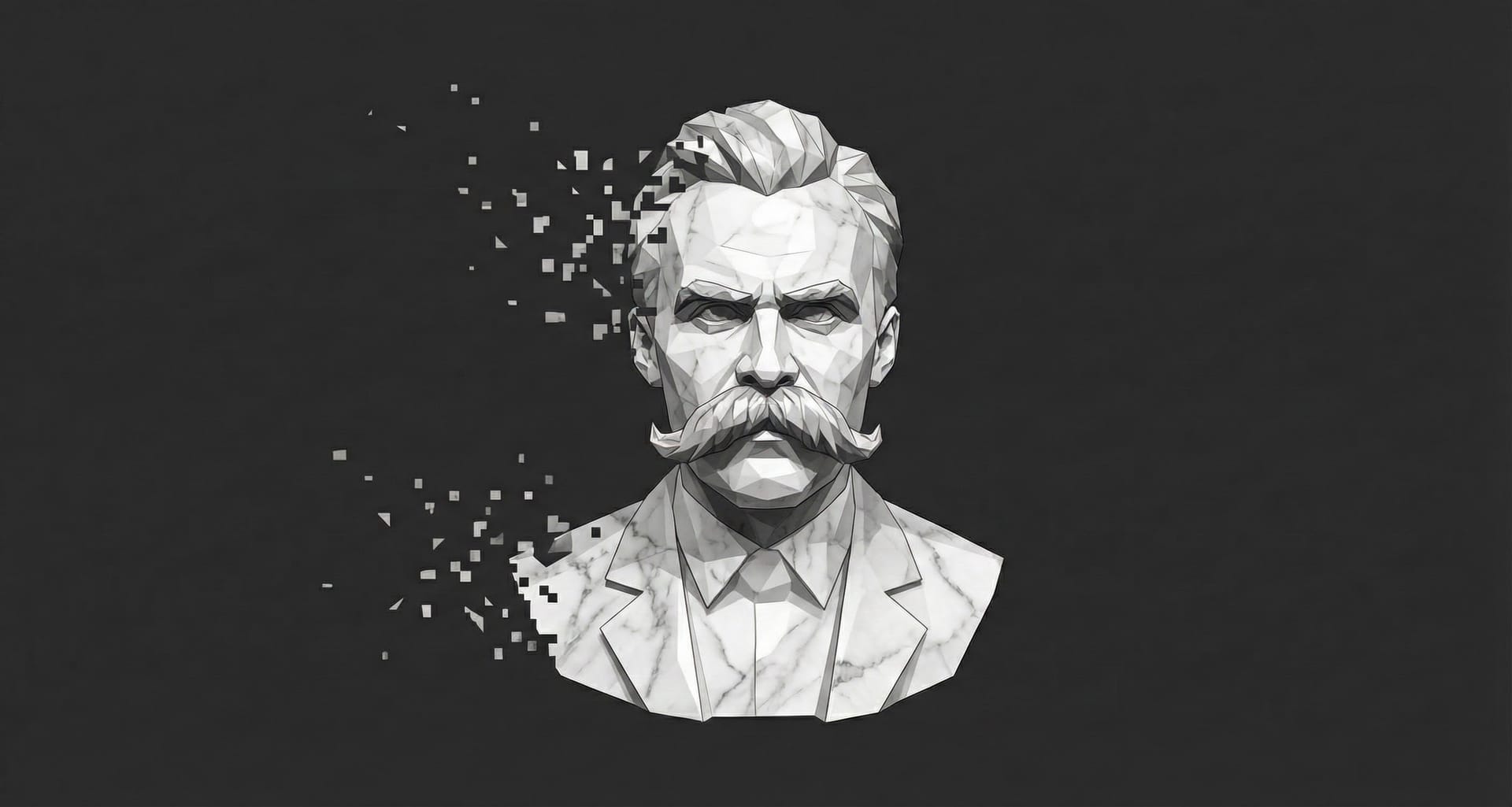
Note: This article explores the philosophical concepts of "Master Morality" (Herren-Moral) and "Slave Morality" (Sklaven-Moral) as defined by Friedrich Nietzsche in his 1887 work, On the Genealogy of Morality. These terms are philosophical metaphors used to describe opposing value systems in history. They are not endorsements of slavery, oppression, or tyranny. Nietzsche’s writing style is intentionally provocative—he famously described his method as "philosophizing with a hammer"—to shatter established comfort zones. We analyze these concepts here strictly through the lens of organizational psychology and leadership dynamics.
If you want to make a modern HR department nervous, simply quote Friedrich Nietzsche. Specifically, quote his genealogy of morals.
In the modern corporate world, we are obsessed with "Values." We print them on posters, we embed them in onboarding decks, and we recite them at All-Hands meetings. usually, these values are variations of the same list: Empathy, Safety, Collaboration, Equality, Transparency.
These are, undeniably, "Good" values. But Nietzsche would ask a terrifying question: "Says who?"
Who defined "Good"? And more importantly, why did they define it that way?
In his 1887 masterpiece On the Genealogy of Morality, Nietzsche argues that there is no single, objective morality. Instead, history is a struggle between two opposing value systems: Master Morality (Herren-Moral) and Slave Morality (Sklaven-Moral).
Understanding this distinction is the key to understanding the central conflict in every growing organization. It is the conflict between the Founder's Drive (Innovation, Risk, Excellence) and the Organization's Inertia (Safety, Consensus, Fairness).
To be a "Chief Wise Officer" is to recognize which morality is operating in your boardroom, and to know when to switch them.
1. The Genealogy: Good vs. Bad vs. Evil
We must first understand the history. Nietzsche argues that in ancient times (think Homeric Greece or Republican Rome), the ruling class, the "Masters", created values based on what they were.
The Master’s Equation: Good vs. Bad
For the Master, "Good" (Gut) was a description of himself.
- Good = Strong, noble, powerful, rich, creative, dangerous, vital.
- Bad (Schlecht) = Weak, cowardly, poor, common, ineffective.
Notice that there is no moral judgment here. "Bad" is not "Evil." "Bad" simply means "Unfortunate" or "Useless." The lion does not hate the sheep; the lion just eats the sheep. The Master morality is Self-Affirming. It starts with "I am great," and therefore "What I do is Good."
The Slave’s Equation: Good vs. Evil
The "Slaves" (the oppressed, the weak, the masses) could not fight the Masters with force. So, they fought them with values. They committed a genius act of psychological inversion. They looked at the Masters and said: "You are cruel, you are oppressive, you are dangerous. Therefore, you are Evil (Böse)."
If the Master is Evil, then the opposite of the Master must be Good.
- Good = Meek, humble, safe, collaborative, poor, obedient.
- Evil = Strong, aggressive, rich, independent.
Slave morality is Reactive. It does not start with "I am great." It starts with "He is evil, and I am the opposite of him, therefore I am good."
2. The Corporate Translation: Innovation vs. Process
Now, let us strip away the historical language and look at your company. Every organization is a battleground between these two modes of thinking.
The Founder Mode (Master Morality)
Founders, by definition, operate on Master Morality. They are creators. They do not wait for permission. They define "Good" by Outcomes.
- The Value: "We ship this feature because it dominates the market."
- The Risk: It might break things. It might upset competitors. It might burn people out.
- The Mindset: Will to Power. The drive to assert oneself on reality.
- The Judgment: They judge employees as "Effective" (Good) or "Ineffective" (Bad). They don't think an ineffective employee is a "sinner," just a "bad fit."
The Bureaucratic Mode (Slave Morality)
As the company grows, it hires managers, HR, and compliance officers. These roles are designed to mitigate risk. They operate on Slave Morality. They define "Good" by Intentions and Safety.
- The Value: "We must ensure the process is fair. We must not offend anyone. We must seek consensus."
- The Risk: Stagnation. Mediocrity. The suppression of exceptional talent because it disrupts the "harmony."
- The Mindset: Resentment. The drive to pull the outlier back to the mean.
- The Judgment: They judge behavior as "Compliant" (Good) or "Toxic" (Evil).
Crucial Note: Nietzsche is often misread as saying Master Morality is "Better." He acknowledges that Slave Morality gave us depth, soul, and civilization. A society of only "Masters" is a pack of beasts. However, a corporation run entirely on Slave Morality is a dead corporation. It loses the vitality to compete.
3. The Poison: Ressentiment in the Culture
The greatest danger of Slave Morality in a business context is what Nietzsche called Ressentiment (Resentment).
Ressentiment is the psychological state of blaming one's own powerlessness on an external "Evil." In a company, this manifests as the Tall Poppy Syndrome.
When a High Performer (Master Morality) joins a team of average performers (Slave Morality), the team does not say: "Wow, look at his excellence, let's try to match that." Instead, the team feels threatened. His speed makes them look slow. His decisiveness makes them look hesitant. Because they cannot attack his competence (he is delivering results), they attack his morality.
- "He is too aggressive."
- "He doesn't collaborate enough."
- "He is creating a psychologically unsafe environment by setting high standards."
This is the weaponization of ethics. The group uses "Values" to chain the lion. If you, as the Chief Wise Officer, allow Ressentiment to dictate your culture, you will drive away every single A-Player you hire. You will be left with a perfectly "nice," perfectly "compliant," and perfectly bankrupt company.
4. The "Evil" of Competence
Let’s apply this to a specific scenario: The Layoff vs. The Pivot.
Imagine a CEO realizes a product line is failing. It is burning cash.
- Master Morality: "This is failing. It is 'Bad' (Ineffective). We must kill it immediately and move the resources to the winning product to ensure the survival of the organism."
- Slave Morality: "But people worked hard on this! If we kill it, we are 'Evil' (Uncaring). We must keep it alive to spare their feelings, or find a 'gentle' way to wind it down over 12 months."
The Master looks at Vitality (Life/Growth). The Slave looks at Suffering (Pain Avoidance).
The paradox is that the "Slave" approach often causes more suffering in the long run. By keeping the failing unit alive, the company runs out of cash, and everyone loses their job. The "Cruelty" of the Master (cutting the limb to save the body) is actually the highest form of responsibility. But to the Slave, it looks like sin.
5. Beyond Good and Evil: The Strategic Imperative
So, what is the solution? Should we all become sociopathic tech-bros wearing fleece vests? No. Nietzsche despised the "petty tyrant" just as much as the "herd animal."
The goal is to go Beyond Good and Evil. This means moving beyond moralizing strategic decisions.
As a leader, you must develop a Dual Consciousness.
A. Protect the "Masters" (The Creators)
You must create "Safe Zones" for Master Morality. Your R&D team, your Sales tigers, your frantic prototypers, they need to be judged by the Master's standard: Did it work? Do not force them to conform to the "equality" metrics of the accounting department.
- Action: Reward unequal outcomes. If an engineer delivers 10x value, pay them 10x, even if it "upsets the pay bands."
- Action: Filter feedback. If a complaint about a high performer is rooted in Ressentiment ("He makes us look bad"), discard it. If it is rooted in Function ("He broke the build"), address it.
B. Respect the "Slaves" (The Stabilizers)
You also need Slave Morality. You need Customer Support to be empathetic. You need Legal to be cautious. You need HR to ensure safety.
- Action: Do not put a "Master" in charge of Compliance. They will view the rules as suggestions and destroy you.
C. The Sovereign Individual
The ultimate Nietzschean ideal is not the Master, but the Sovereign Individual (the embryonic Übermensch). This is the leader who has the capacity for both, but is enslaved by neither. The Sovereign Leader can be ruthless when the market demands it, and compassionate when the team needs it. They do not act out of reaction (fear of the board, fear of Twitter, fear of competitors). They act out of overflowing power. They are generous not because they "have to be" (guilt), but because they have so much energy that giving it away is a joy.
6. Conclusion: Who Defines Your Good?
Nietzsche’s warning to the modern executive is simple: Beware of values you did not create.
If you find yourself making a decision just to avoid being called "bad" by the industry, or the media, or your own slack channel, you are operating from Slave Morality. You are being reactive.
The Chief Wise Officer defines their own Good.
- Good is what increases the capacity for action.
- Bad is what reduces it.
Your duty is to the vitality of the enterprise. Sometimes, that requires empathy. Sometimes, it requires the hammer. The wisdom is in knowing that neither tool is "evil." They are just tools.
No spam, no sharing to third party. Only you and me.





Member discussion