
Montaigne: The Power of "I Don't Know" (Epistemic Humility)
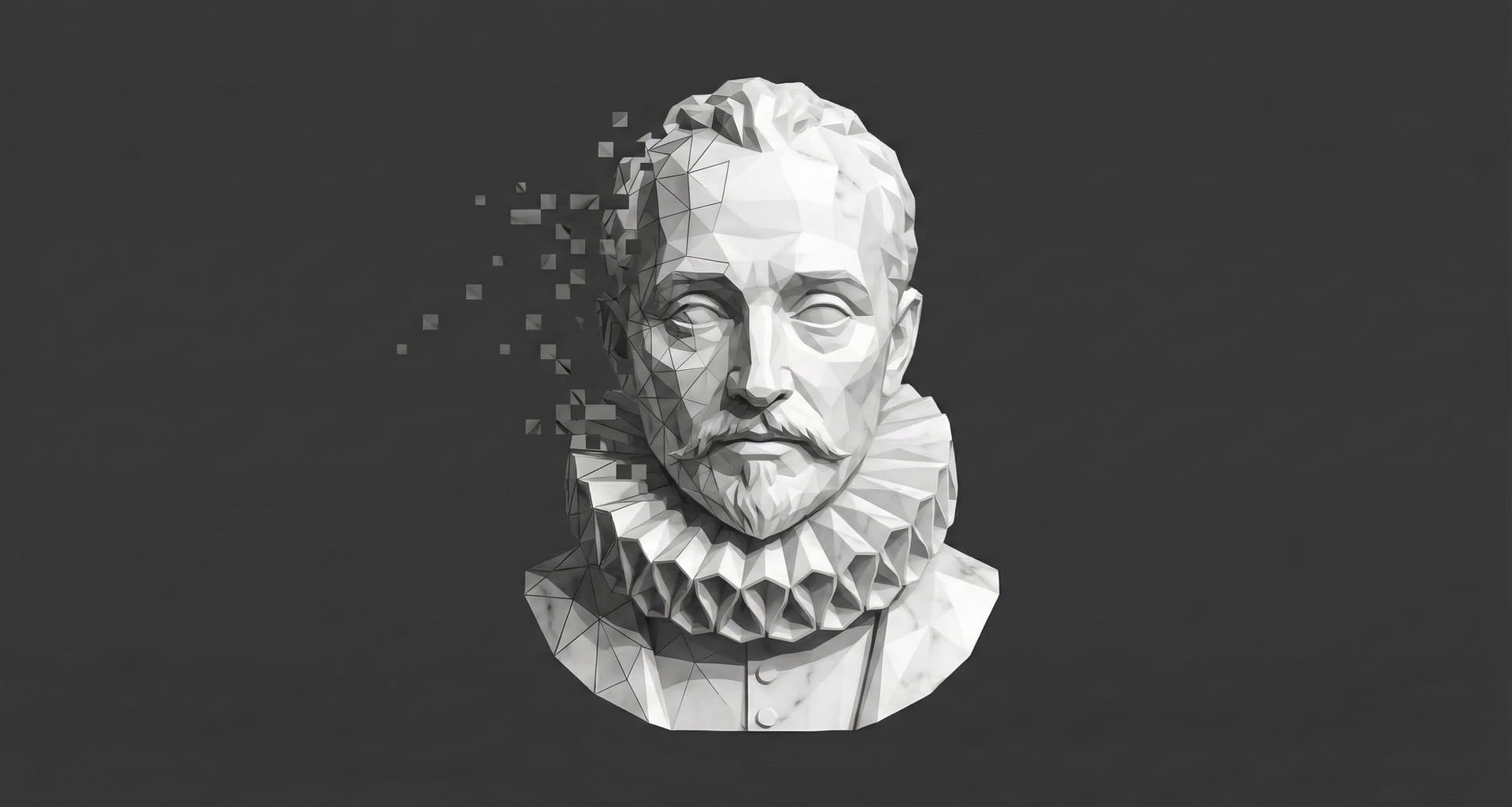
In the modern boardroom, "Confidence" is the currency.
We hire consultants because they sound sure. We promote executives who have "strong opinions." We demand "high-conviction" roadmaps.
If a CTO says "I don't know if this architecture will hold," they are viewed as weak.
If a CEO says "I don't know if this acquisition will work," the stock price drops.
So, we pretend. We build elaborate spreadsheets to project revenue for 2030 (pure fiction). We speak in absolutes. We construct a theater of certainty.
But the most dangerous person in the room is not the one who doubts. It is the one who is certain of something that isn't true.
Michel de Montaigne, the 16th-century French nobleman who invented the "Essay," gave us the antidote to this toxic certainty. His philosophy was built on two simple words that can save your company from disaster:
"Que sais-je ?" (What do I know?)
1. The Giant: The Man in the Tower
In 1571, Michel de Montaigne did something unheard of for a man of his status. He resigned from public life, retreated to his castle in Bordeaux, and locked himself in a tower library.
He wasn't hiding. He was auditing the human mind.
On the beams of his library ceiling, he painted quotes from Greek and Roman philosophers about the limits of human knowledge. He realized that most "facts" were just customs, and most "truths" were just local opinions.
He struck a medal for himself with a pair of scales in balance (symbolizing suspended judgment) and his motto: "Que sais-je ?"
He didn't write a "Manifesto" or a "Treatise" (words that imply authority). He wrote Essais—a word he coined, meaning "Attempts" or "Trials."
He wasn't preaching the truth; he was testing his thoughts.
The Executive Lesson:
Montaigne teaches us that Wisdom is not the accumulation of facts; it is the subtraction of illusions.
The Chief Wise Officer does not need to have all the answers. They need to be the one person in the room brave enough to question the answers everyone else is taking for granted.
2. The Trap: The Dogmatism of the Expert
Montaigne hated "Pedants"—the scholars of his time who memorized Aristotle but couldn't solve a practical problem.
He argued that Dogma (unquestioned belief) is the enemy of intelligence.
In tech, we see this Dogma everywhere:
- "We must use Microservices." (Why? Because Netflix does.)
- "We must be in the office 5 days a week." (Why? Because that's how we alway did.)
- "AI will replace 50% of our staff." (Why? Because a report said so.)
These are not strategies; they are Belief Systems.
When you stop asking "Why?", you stop thinking. You become a Pedant.
3. Epistemic Humility as a Risk Strategy
Epistemic Humility is not about having low self-esteem. It is about having high accuracy.
It is the discipline of knowing exactly where your knowledge ends and where your "Guessing" begins.
- The Arrogant Leader: "We will capture 20% of the market in Q1." (Treats a guess as a fact. If he fails, he blames the team.)
- The Montaigne Leader: "My hypothesis is that we can capture 20%, assuming X and Y are true. Let's run a test to validate X." (Treats a guess as a hypothesis. If he fails, he updates the model.)
The "Circle of Competence":
Centuries later, Warren Buffett would formalize this:
"What counts for most people in investing is not how much they know, but how realistically they define what they don't know."
Staying inside your Circle of Competence is safe. Stepping outside it while pretending you are still inside is fatal.
4. The Artifact: The Epistemic Risk Ledger
How do you operationalize "I Don't Know" without looking incompetent?
You change the vocabulary. You don't say "I don't know"; you say "That is an Assumption."
Before any major product launch or strategic pivot, run this exercise with your leadership team.
Tool: The Epistemic Risk Ledger
Goal: Force the team to separate "Facts" (Evidence) from "Faith" (Assumptions).
Instructions:
- Draw a T-Chart on the whiteboard.
- Left Column: "What we Know" (Must have data evidence).
- Right Column: "What we Believe" (Assumptions/Intuition).
- The Rule: If you cannot prove it with data right now, it goes in the Right Column.
| The Claim | Category | The Test (How to move it to "Known") |
| "Users want a dark mode." | Assumption | Survey 500 users or A/B test a mock button. |
| "The API can handle 10k RPS." | Fact | Load test report from last Tuesday. |
| "Competitor X is building this feature." | Assumption | Rumor. Need to verify via sales calls. |
| "This re-write will take 3 months." | Assumption | Dangerous. When has a rewrite ever taken 3 months? |
The Outcome:
Usually, you will find that most of your "Strategy" is actually in the Assumption column.
This is terrifying, but healthy. Now you know that your job is not to "Execute"; your job is to "Validate."
Summary
In his tower, Montaigne wrote:
"The plague of man is the opinion that he knows something."
Most startups die not because of what they didn't know, but because of what they thought they knew that turned out to be wrong.
- They knew users wanted this feature (they didn't).
- They knew the market was ready (it wasn't).
The Chief Wise Officer brings the culture of the "Essay"—the Attempt.
They build a company that is constantly testing reality, rather than dictating it.
Be proud to say "I don't know."
It is the only sentence that allows you to learn.
Further Reading
- "The Essays" by Michel de Montaigne. (Specifically "Of Pedantry" and "Of Experience").
- "How to Live: A Life of Montaigne" by Sarah Bakewell. (The best modern biography).
- "Superforecasting" by Philip Tetlock. (The modern science of epistemic humility in prediction).
No spam, no sharing to third party. Only you and me.
Member discussion