
Concept: The Lindy Effect — Why Old Technology Beats New Technology

In the technology industry, we are afflicted with Neomania: the obsession with the New.
We assume that because software evolves rapidly, "Old" equals "Obsolete." We look at a 10-year-old codebase and call it "Legacy." We look at a 6-month-old JavaScript framework and call it "Modern."
This intuition is wrong.
In the domain of information and ideas, Time operates differently than it does in biology.
For biological creatures, every year lived brings you closer to death.
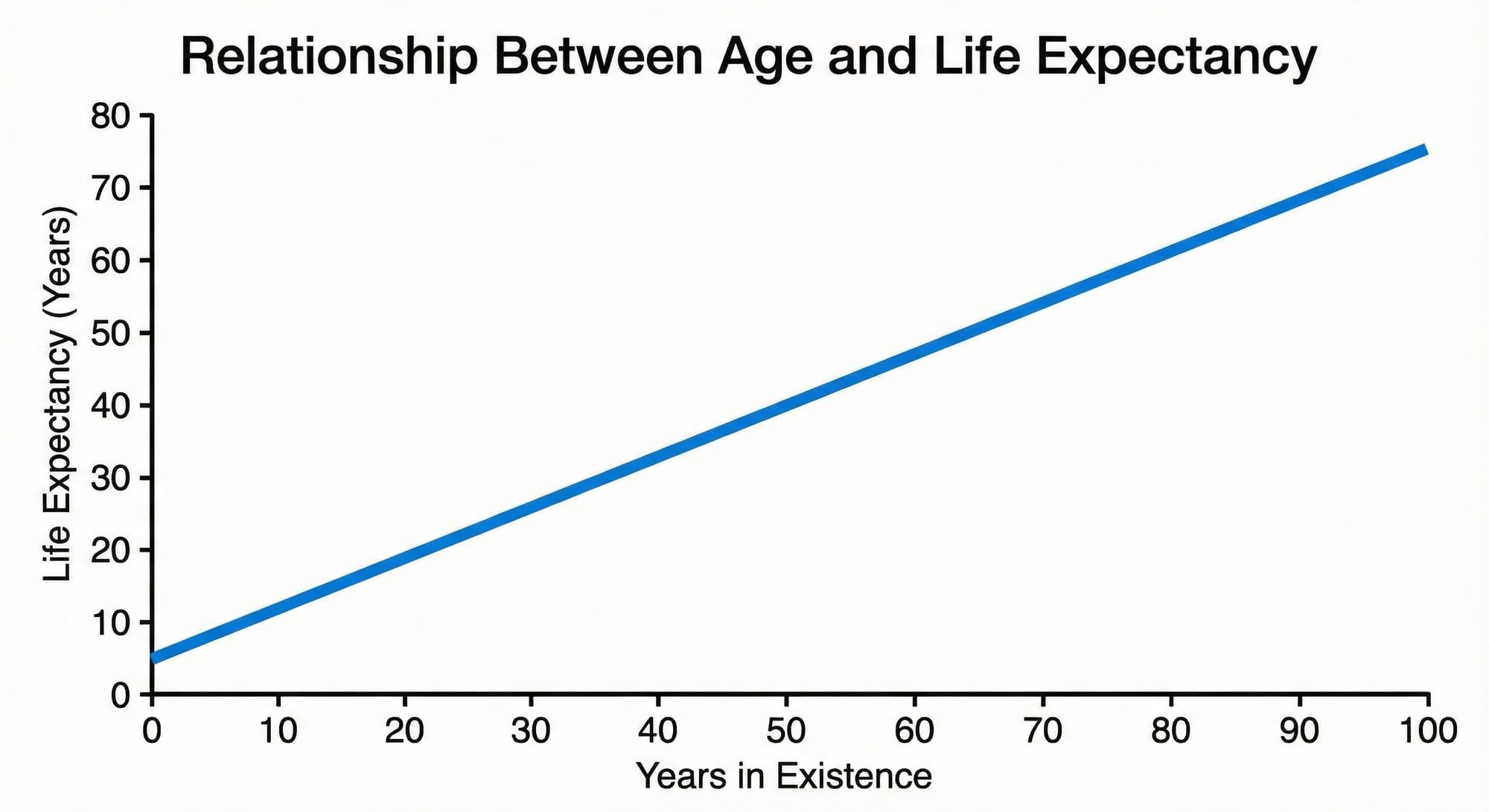
For ideas and technologies, every year lived doubles your life expectancy.
This is the Lindy Effect.
Understanding it is the difference between a CTO who builds a platform that lasts a decade, and a CTO who rewrites the stack every two years because their dependencies went extinct.
1. The Origin: Cheesecake and Comedy
The concept was born not in a lab, but in a deli.
Lindy’s Delicatessen in New York City was a hangout for Broadway actors and comedians in the 1960s. They spent their evenings gossiping about careers.
Author Albert Goldman (1964) noticed a pattern in their conversations:
"The life expectancy of a television comedian is inversely proportional to the total amount of his exposure on the medium."
But for the established giants, the rule inverted. If a comedian had been working for 10 years, they would likely work for another 10. If they had been working for 1 year, they might be gone by next season.
Mathematician Benoit Mandelbrot later formalized this, and Nassim Taleb popularized it in Antifragile.
The Definition:
For non-perishable things (technologies, ideas, books, religions), the expected remaining life is proportional to their current age.
2. The Mathematics of Survival
The Lindy Effect applies only to the non-perishable.
- Perishable (Humans): If you are 90 years old, you have very few years left. Time is an enemy.
- Non-Perishable (Ideas): If a book has been in print for 50 years, it will likely be in print for another 50. Time is a filter.
Why? Because Time is the ultimate stressor.
Every day a technology exists, it is attacked. It is hacked, stressed, scaled, and challenged by competitors. If it survives the attack, it reveals its robustness.
A technology that has survived 30 years of chaos (like SQL) has proven it is compatible with reality. A database released last Tuesday has proven nothing.Getty Images Explore.
3. Applying Lindy to the Tech Stack
As a technology leader, you can use the Lindy Effect as a razor to shave off hype from your roadmap.
The "Boring" Stack
- SQL (Born 1974): It has survived the Object-Oriented craze, the NoSQL hype, and the Graph DB trend. Betting on SQL is betting on Lindy.
- Email (Born 1971): Every few years, a startup claims it will "Kill Email" (Slack, Teams, Asana). Yet, Email remains the global identity protocol.
- Linux (Born 1991): It runs the internet.
The "Fragile" Stack
- JavaScript Frameworks: The average lifespan of a "hot" JS framework is roughly 3–5 years. If you build your core enterprise system on the absolute newest framework, Lindy suggests it will be deprecated before you finish the project.
The Strategy:
Build your Core on Lindy technologies (Old, Boring, Proven).
Build your Experiments on New technologies (Risky, High Reward).
Never invert this.
4. The Lindy Effect in Culture
This concept extends beyond code. It explains why we still read Homer and Seneca.
If a book has been relevant for 2,000 years, it touches on something fundamental to human nature that does not change. A "New York Times Bestseller" about management theory written in 2024 has a 99% chance of being forgotten by 2026.
The Executive Lesson:
When you are looking for wisdom on leadership, do not read the business book released this month. Read the book that your grandfather could have read.
- Read Cicero (Age: 2,000+ years).
- Read Clausewitz (Age: 190+ years).
- Read Peter Drucker (Age: 50+ years).
The older the source, the more likely the advice is timeless rather than situational.
Summary
The Lindy Effect teaches us humility before Time.
We tend to think the "New" is an improvement. Often, the "New" is just a variation that hasn't been tested yet.
In your next architectural review, when an engineer proposes replacing a 15-year-old stable protocol with a "modern" tool released 6 months ago, ask them:
"What makes you think this new tool will outlive the old one?"
Bet on the things that have already won.
No spam, no sharing to third party. Only you and me.
Member discussion