
Lexicon: Superposition
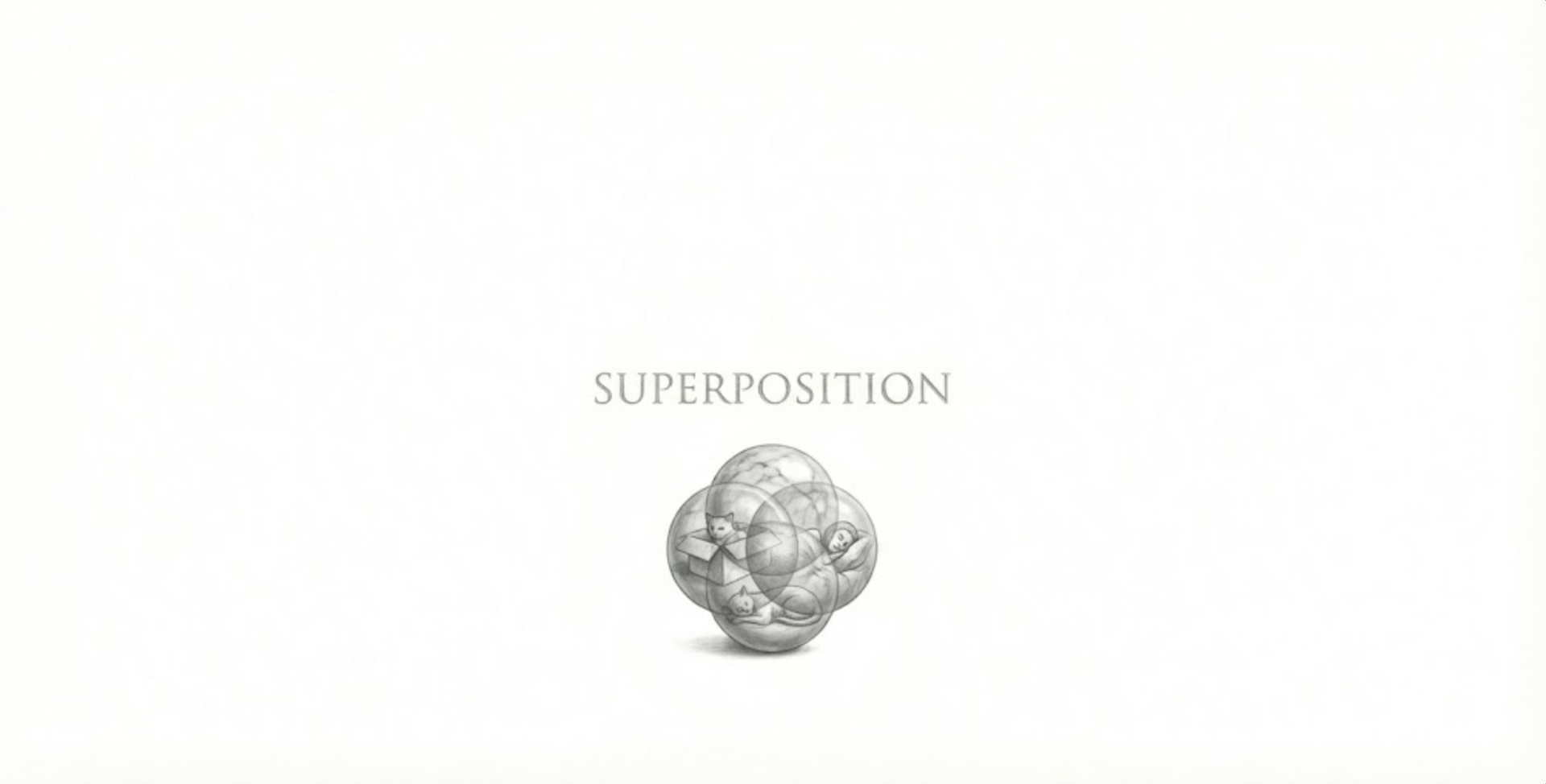
The Definition
In classical physics, a bit is either a 0 or a 1. It’s a light switch: On or Off. In quantum mechanics, a qubit (quantum bit) can exist in a state of Superposition. It is 0 and 1 at the same time, until it is measured. Think of a spinning coin. While it is spinning, is it Heads or Tails? It is both. It contains the probability of both. That is Superposition.
The Tech Application
Superposition is what makes Quantum Computers terrifyingly powerful. A classical computer tries to solve a maze by walking down one path, hitting a wall, going back, and trying the next path. (Sequential). A quantum computer uses superposition to walk down every path simultaneously. This is why it destroys encryption. It doesn't "guess" the password; it tries all passwords at once.
The Strategy Application (Strategic Ambiguity)
Leaders can use Strategic Superposition. Sometimes, forcing a decision (collapsing the wave function) too early is a mistake.
- The Dogmatist: "We are definitely launching Product A." (State = 1).
- The Quantum Strategist: Maintains a state where Product A and Product B are both "alive" and funded until the market reveals which one is viable. By keeping options open (in superposition), you retain the ability to adapt to any future state. You only "collapse" the decision when the measurement (data) is final.
The Chief Wise Officer's Rule: Uncertainty is not a lack of data. It is a state of potential. Don't force the coin to land before you are ready to spend it.
No spam, no sharing to third party. Only you and me.


Member discussion