
Lexicon: Skepsis
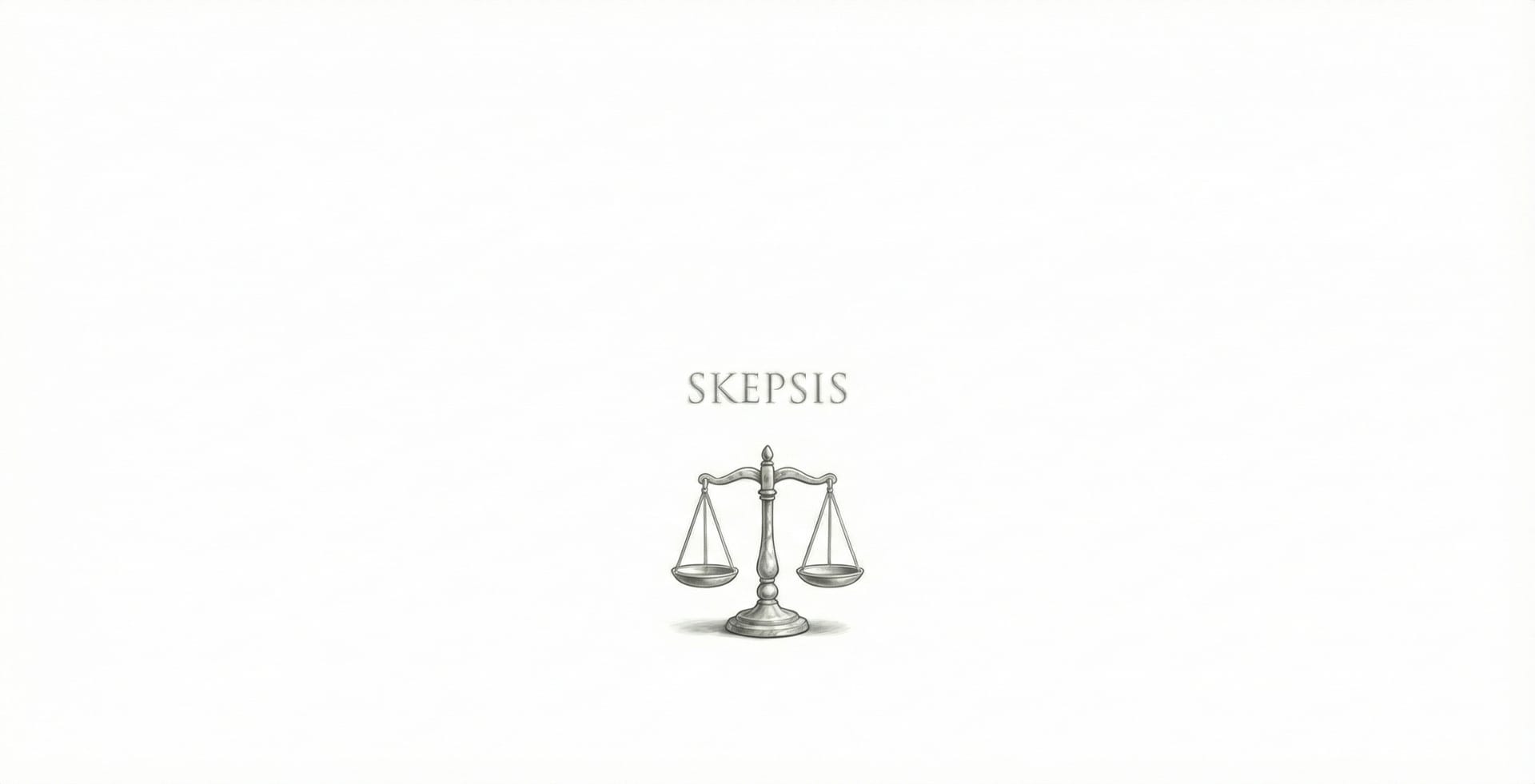
The Etymology
From the Greek verb skeptesthai, meaning "to search," "to examine," or "to consider." It does not mean "to deny." Originally, a Skeptikos was simply "One who searches."
The Definition
In modern English, a "Skeptic" is someone who doubts everything and refuses to believe (a Cynic). In Ancient Philosophy (Sextus Empiricus), Skepsis is an active state of Continuous Inquiry.
- The Dogmatist says: "I have found the Truth." (He stops searching).
- The Academic says: "Truth is impossible to find." (He stops searching).
- The Skeptic says: "I have not found the Truth yet, but I am still looking." (He keeps searching).
Skepsis is the opposite of closure. It is the discipline of keeping the file open.
The Corporate Application
In the boardroom, we often confuse the Cynic with the Skeptic.
1. The Corporate Cynic (The Lazy Skeptic)
- Says: "That new strategy won't work. We tried it in 2018."
- Mindset: Dogmatic Negativity. They are sure it will fail. They use "doubt" as an excuse to do nothing.
- Value: Low. They kill innovation.
2. The True Skeptic (The Investigator)
- Says: "I don't know if that strategy will work. The data from 2018 suggests X, but the market has changed. Let's run a test."
- Mindset: Open Inquiry. They suspend judgment until the evidence is in.
- Value: High. They prevent disaster without killing momentum.
The Chief Wise Officer's Rule: Encourage Skepsis (Investigate everything). Fire Cynicism (Dismiss everything). The goal of Skepsis is not to stop the project, but to ensure the project survives reality.
No spam, no sharing to third party. Only you and me.
Member discussion