
Lexicon: Facticity
The Etymology
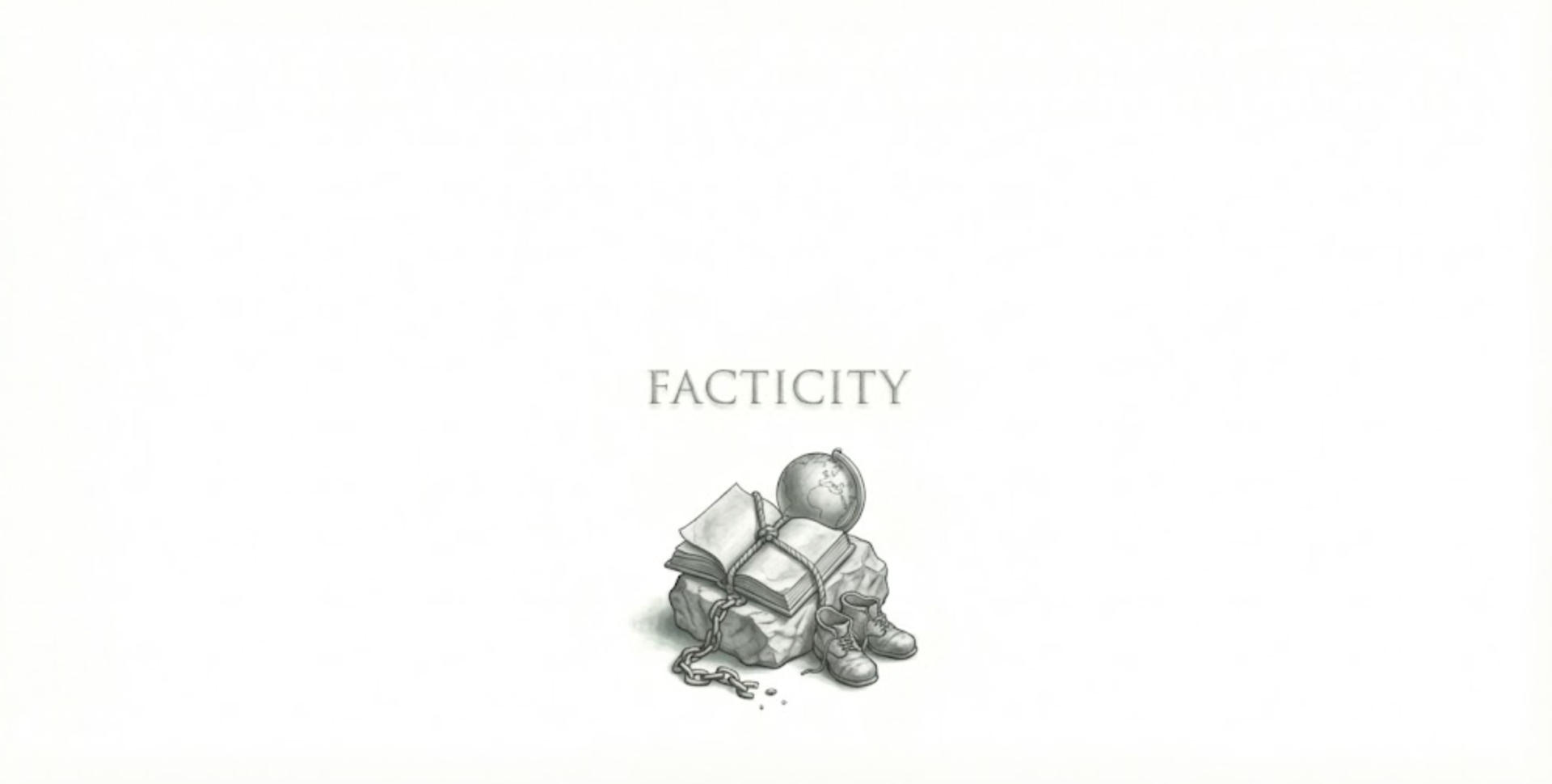
From the Latin factum ("that which has occurred") or "fact." In Sartre’s Being and Nothingness, Facticity (Facticité) refers to the "facts" of your existence that you did not choose.
The Definition
Sartre argues that we are radically free, but we are not gods. We practice our freedom against a backdrop of unchangeable facts. Facticity includes:
- Your place of birth.
- Your past actions (which cannot be undone).
- Your body (height, health).
- The environment (the weather, the economy).
The Paradox: You are not your Facticity (you are free to interpret it), but you cannot deny your Facticity.
- Example: If you are standing in front of a cliff (Facticity), you cannot choose for the cliff not to be there. But you can choose to see the cliff as an obstacle to climb down, a view to admire, or a danger to avoid. The Fact is fixed; the Meaning is chosen.
The Corporate Application
In business, leaders often fail to balance Freedom and Facticity.
1. The "Toxic Positivity" Failure (Denying Facticity) The CEO says: "We will grow 50%!" The Team says: "But the market is down 20%." The CEO says: "Don't bring me problems, bring me solutions!" This is delusion. By denying the Facticity of the market, the CEO makes it impossible to navigate it. You cannot steer a ship if you pretend the storm doesn't exist.
2. The "Victim" Failure (Surrendering to Facticity) The Manager says: "We missed our target because of the supply chain issues." This is Bad Faith. It treats Facticity as a master. The Chief Wise Officer says: "The supply chain issue is a Fact. Your failure to adapt to that Fact was a Choice."
The Strategy: A strategy is simply the intelligent application of Freedom to Facticity.
- List the brutal facts (Budget, Legacy Code, Competitors).
- Accept them completely.
- Choose your path through them.
No spam, no sharing to third party. Only you and me.
Member discussion