
Lexicon: Akrasia (ἀκρασία)
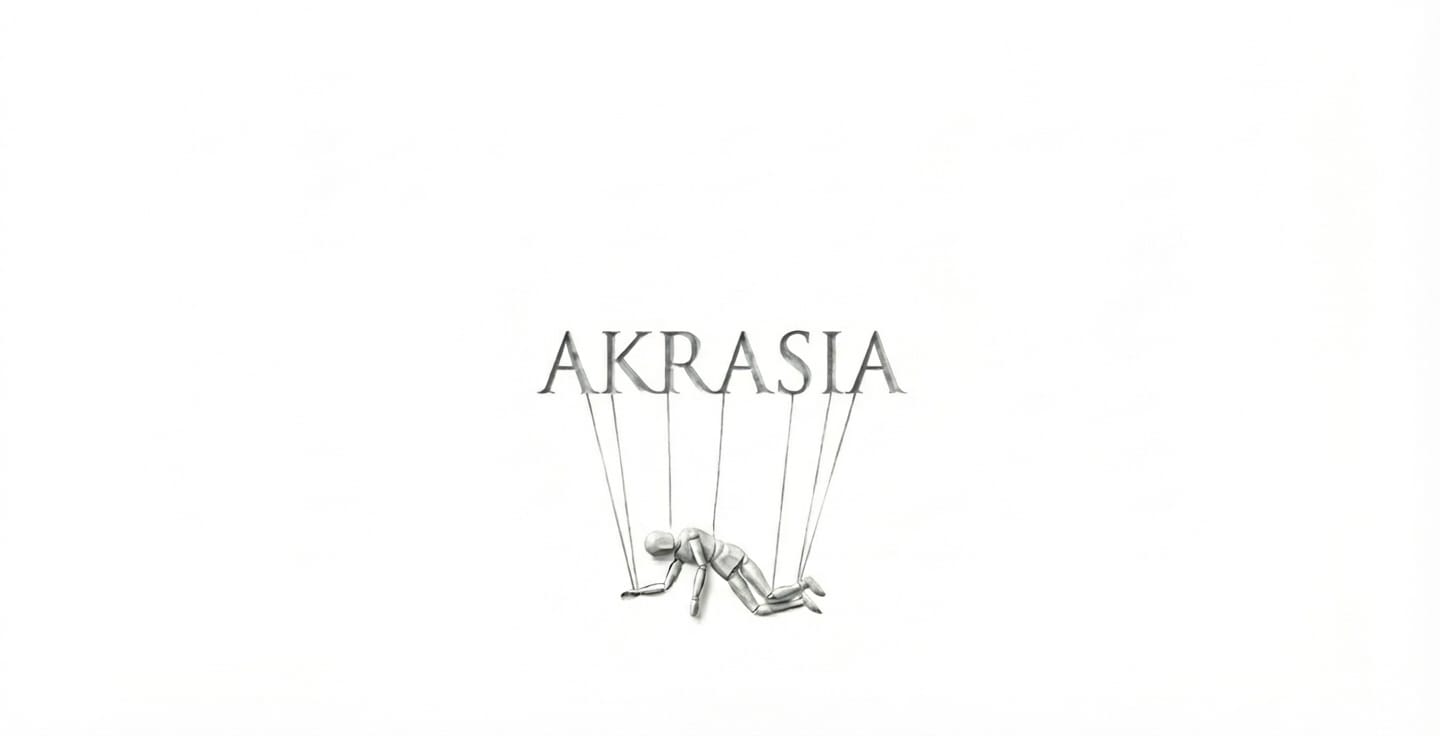
The Etymology
From the Greek a ("without") + kratos ("power" or "strength"). Literally: "Lack of Command" or "Powerlessness."
The Definition
Akrasia is the state of acting against your own better judgment. It is often translated as "incontinence" or "weakness of will."
Socrates famously argued that Akrasia was impossible. He believed that if you truly knew what was good, you would do it. Therefore, if you did something bad, it was only because of ignorance. Aristotle disagreed. He argued that humans are often irrational. We can possess the knowledge of the right path (e.g., "I should exercise") and yet, due to passion or weakness, choose the wrong path (e.g., "I will sit on the couch").
The Corporate Application
The modern corporation is an engine of Akrasia. Every organization has a list of things it knows it should do, but refuses to do.
- We know we need to pay down technical debt, but we ship new features instead.
- We know that project is failing, but we keep funding it to avoid admitting defeat.
- We know we should fire that toxic high-performer, but we delay the conversation.
This is not "strategy"; this is organizational weakness. The antidote to Akrasia is Enkrateia (Self-Mastery). It is the ability to align your actions with your knowledge.
If you know the right decision, make it. Everything else is just a slow form of self-sabotage.
No spam, no sharing to third party. Only you and me.





Member discussion