
The Innovator’s Dilemma: Cannibalize Yourself
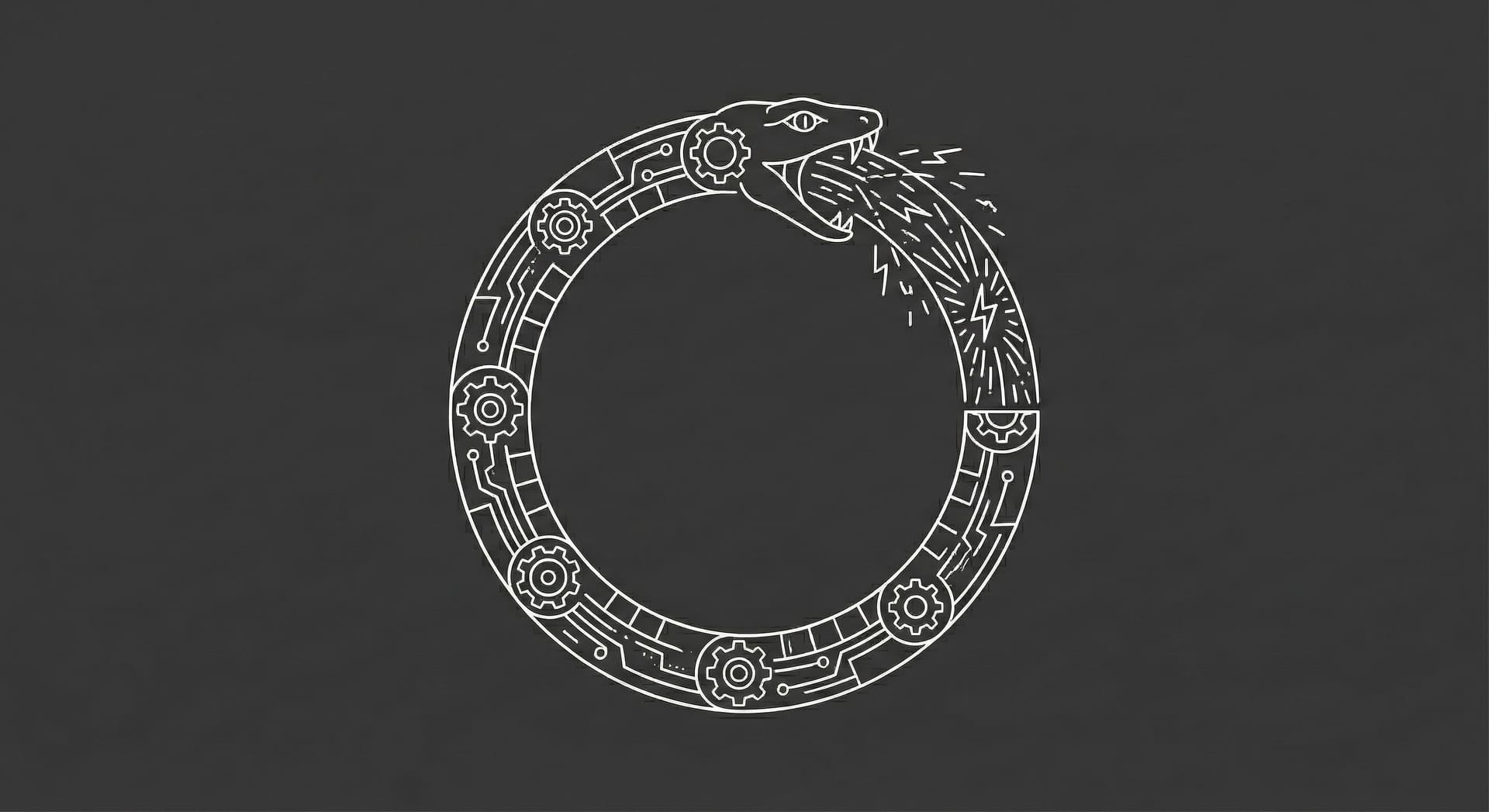
Why did Kodak die? They invented the digital camera.
Why did Blockbuster die? They had the chance to buy Netflix for $50 million.
Why did Nokia die? They had the best mobile supply chain in the world.
The standard answer is "Arrogance" or "Stupidity." We like to think that these executives were sleeping at the wheel.
But the truth is much scarier.
According to Clayton Christensen, the late Harvard professor, these companies failed not because they were badly managed, but because they were well managed.
They did exactly what they were taught in business school:
- They listened to their best customers.
- They invested in their most profitable products.
- They ignored small, low-margin markets.
And that is exactly why they died.
This is The Innovator’s Dilemma. For the Chief Wise Officer, understanding this dynamic is the difference between leading a legacy and overseeing a funeral.
1. The Giant: Clayton Christensen
Clayton Christensen (1952–2020) was not just a consultant; he was the architect of modern Silicon Valley strategy. His 1997 book, The Innovator's Dilemma, is the only business book Steve Jobs deeply respected.
Christensen discovered a fatal flaw in the logic of capitalism.
He distinguished between two types of innovation:
- Sustaining Innovation: Making good products better for your best customers. (e.g., Adding a 5th blade to a Gillette razor, or making the iPhone 15% faster). This is high margin and makes shareholders happy.
- Disruptive Innovation: Making a product that is initially worse, cheaper, and simpler. (e.g., The first digital camera was pixelated and terrible). Your best customers hate it.
The Trap:
A "Good Manager" will always choose Sustaining Innovation. Why invest in a crappy digital camera that loses money when you can sell high-margin film to professional photographers?
So, the incumbent ignores the "toy."
2. The Mechanics of Death
Here is how the death spiral happens, step by step:
- The Incumbent ignores the low end. You are making enterprise servers ($100k). A startup makes a PC ($1k). The PC is a toy. You ignore it to focus on your high-paying enterprise clients.
- The Disruptor improves. The startup improves the PC. It’s still not as good as a server, but it’s good enough for small businesses.
- The "Flight to Quality." You (the Incumbent) are happy to lose the small business market because the margins were low anyway. You move "upmarket" to even more expensive servers. Your profits actually go up. You feel like a genius.
- The Crossover. Suddenly, the PC becomes powerful enough to run a server. The startup can now do what you do, but 10x cheaper.
- The Collapse. Your high-end customers switch. You have nowhere left to go. You die.
The Insight:
Disruption always comes from below, not above.
It looks like a toy. It looks like a "bad business."
If you look at a competitor and say, "Their product is trash, and they have no margins," be very afraid. That is exactly what a disruptor looks like.
3. The Only Solution: Cannibalize Yourself
How do you survive this?
You cannot fight disruption from inside your main company.
Your Sales team won't sell the cheap product (low commission). Your Engineers won't work on the "dumb" product (low prestige).
You must create an Autonomous Unit.
- IBM survived the transition from Mainframes to PCs because they built a separate PC division in Florida, far away from their HQ in New York, and told them: "Your goal is to kill the Mainframe."
- Apple survived because Steve Jobs was willing to kill the iPod (his cash cow) with the iPhone.
The Executive Lesson:
If you don't eat your own lunch, someone else will.
You must be willing to launch a product that hurts your current sales. This requires immense courage, because for a few quarters, your numbers will look bad.
4. The Artifact: The Disruption Radar
How do you spot these threats before they kill you?
You stop looking at your competitors (who look like you) and start looking at the "Toys."
Use this tool to scan the market during your next strategy offsite.
🛠️ Tool: The Disruption Radar
Question: Is there a product in the market that matches these 4 criteria?
| The Signal | The Question to Ask | If "YES" -> Action Item |
| 1. Is it "Worse"? | Is there a competitor offering a product with FEWER features than us, but it's simpler/more convenient? | Investigate. Don't laugh at them. Ask who prefers "worse but simpler"? |
| 2. Is it "Cheaper"? | Is there a solution that costs 10x less than ours, even if the quality is terrible? | Map the curve. How fast is their quality improving? If they improve 50% year-over-year, you have 2 years left. |
| 3. The "Non-Consumer" | Are they selling to people we don't even consider customers? (e.g., Students, Hobbyists). | These are the beachhead. The students of today are the CIOs of tomorrow. Build a "Lite" version for them. |
| 4. Low Margins | If we launched this product, would our CFO kill it because it hurts our Gross Margin? | Spin it out. You cannot build this inside the core. You must launch a "Skunkworks" team or acquire the startup. |
Summary
The Innovator’s Dilemma teaches us that Success is the seed of Failure.
The more successful you are, the harder it is to change. The more you listen to your best customers, the more you ignore the future.
As a Chief Wise Officer, your job is to be the Chief Cannibal.
You must protect the "new and ugly" from the "profitable and polished."
You must be the one person in the room who says: "This new technology is a toy. Let's buy it."
Further Reading
- "The Innovator’s Dilemma" by Clayton Christensen. (The mandatory text).
- "Only the Paranoid Survive" by Andy Grove. (How Intel survived by killing their memory business).
- "The Hard Thing About Hard Things" by Ben Horowitz. (Tactical advice on wartime management).
No spam, no sharing to third party. Only you and me.

Member discussion