
The Genealogy of Doubt: Pyrrho, Anaxarchus, and the Cure for Dogmatism
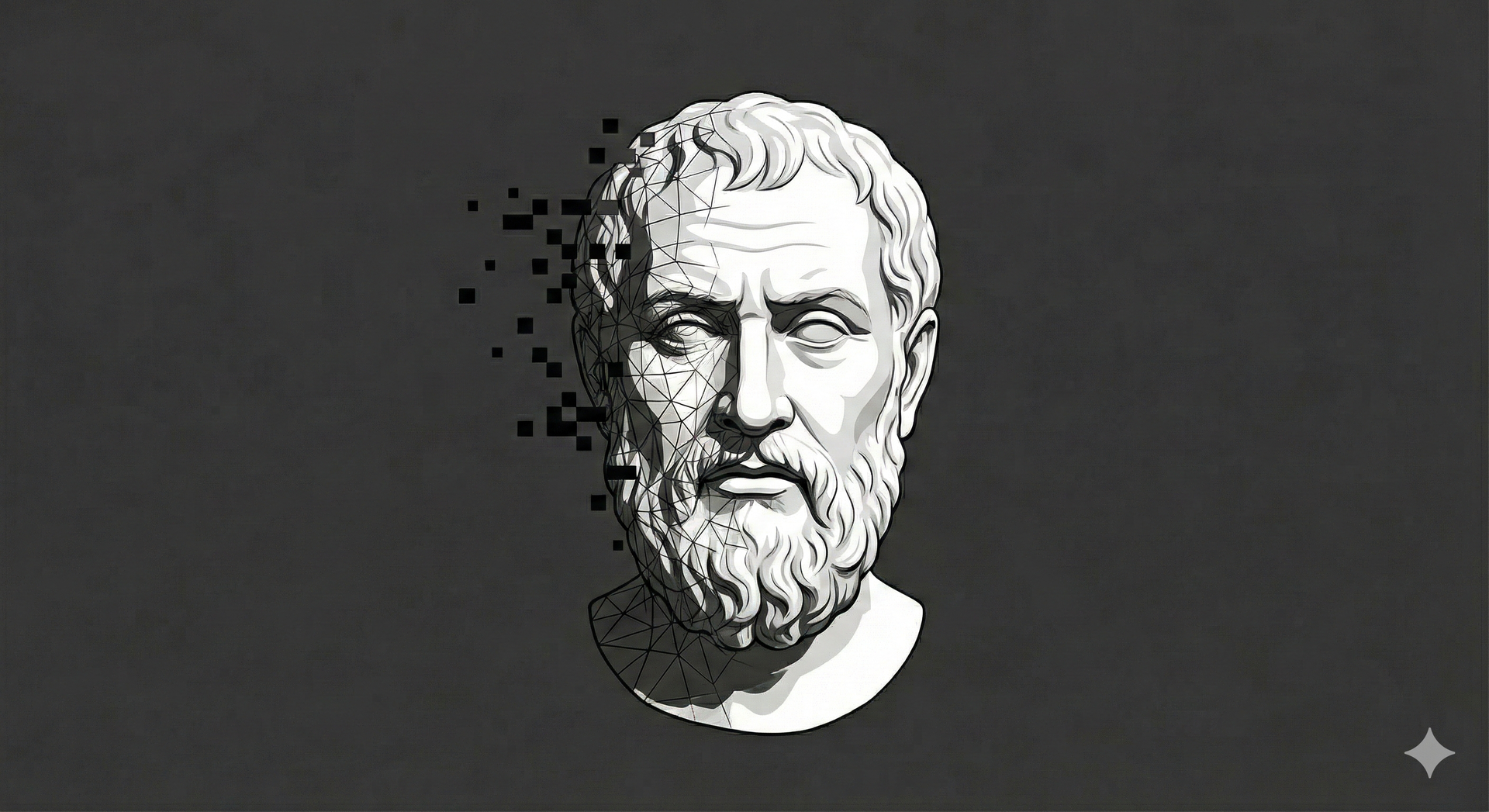
Introduction: The Pathology of Certainty
The history of philosophy is usually narrated as a triumphant ascent toward truth, a progressive accumulation of knowledge where the human intellect, through the rigors of logic and observation, pierces ignorance to grasp reality. From the Platonic Forms to the Aristotelian categories, and onward to the systems of the Stoics and Epicureans, the dominant chord in this intellectual symphony has been dogmatism: the conviction that the non-evident nature of things (adēla) can be known, and that human happiness depends upon this knowledge. Yet, running beneath this current like a subterranean river is a counter-tradition, a lineage of thinkers who diagnosed this will-to-truth not as the solution to the human condition, but as its primary pathology. For these philosophers, the Skeptics, certainty was a fever of the mind, a source of endless anxiety and perturbation. The cure they proposed was radical: the complete suspension of judgment (epoché), a cognitive purgation designed to return the soul to a state of pristine silence and tranquility (ataraxia).
This article is an excavation of the "Genealogy of Doubt." We seek to trace the bloodline of Pyrrhonian Skepticism from its nascent, origins in the atomism of Abdera, through Alexander the Great’s conquests and the mystical encounters in India, to its crystallization in the person of Pyrrho of Elis, and finally to its systemic codification by Sextus Empiricus. This is not a history of epistemological arguments; it is a history of a therapeutic regimen, a "way of life" (agōgē) forged in the geopolitical chaos of the Hellenistic era. By examining the fragmentary evidence of the ancients alongside modern interpretations of Victor Brochard and Marcel Conche, we aim to reconstruct the skeptical stance not as just admission of ignorance, but as a metaphysical position regarding the nature of appearance itself.
We begin with the "laughing philosopher" Democritus, whose atomic theory inadvertently severed the link between the senses and the world, creating the gap in which skepticism would take root. We follow this thread to Anaxarchus of Abdera, the "Happiness Man," who transformed Democritean physics into a philosophy of "stage-painting" (skidagraphia), reducing the world to a dreamlike play of shadows. We witness the transmission of this indifference to Pyrrho, who, tempered by the ascetic fires of the Indian Gymnosophists, transmuted Anaxarchus’s courtly detachment into a rigorous spiritual discipline. Finally, we analyze how this existential silence was codified into the devastating logical armory of Aenesidemus and Agrippa, and administered as a "purgative drug" by the physician-philosopher Sextus Empiricus.
This investigation posits that the "cure" for dogmatism was never a singular doctrine, but a developing stance of the self, a genealogy of doubt that sought to liberate the human spirit from the tyranny of opinion.
Part I: The Abderite Roots – Democritus and the Fracture of Reality
1.1 The Abyss of the Atom
To understand the skeptical impulse, one must return to Abdera in Thrace, the birthplace of the atomist Democritus (c. 460–370 BCE). While classical histories often categorize Democritus as a "dogmatist" because he asserted the existence of atoms and the void, the internal logic of his system contained the seeds of its own undoing, seeds that would blossom into full-blown skepticism in the hands of his successors.
Democritus’s fundamental insight was the distinction between nomos (convention/custom) and physis (nature/reality). In a fragment that serves as the genesis of skeptical epistemology, he declared:
"By convention sweet and by convention bitter, by convention hot, by convention cold, by convention color; but in reality atoms and void."
This aphorism is catastrophic for naive realism. It suggests that the entire phenomenological world, the vibrant, sensory reality in which human beings live, love, and suffer, is an illusion, or at best, a subjective projection. The sweetness of honey, the chill of the wind, and the terror of the storm exist only in the mind of the perceiver, not in the bedrock of reality. Reality itself is cold, silent, and invisible: the collision of indivisible particles in an infinite emptiness.
Democritus himself was acutely aware of the crisis this created for knowledge. If our access to the world is mediated entirely through the senses, and the senses testify only to "convention" rather than "reality," then how can we know the atoms? In a dialogue preserved by Galen, Democritus portrays the Intellect attempting to dismiss the Senses, only for the Senses to retort:
"Wretched mind, do you take your evidence from us and then overthrow us? Our overthrow is your downfall."
This deadlock, which Democritus termed "bastard reasoning" (skotiē gnōmē) as opposed to "legitimate reasoning" (gnisiē gnōmē), established the problem of the criterion (kriterion). The atomists tried to bridge this gap with reason, but the bridge was fragile. Later skeptics would burn the bridge entirely, arguing that if the senses are false, and reason relies on the senses, then knowledge of reality is impossible.
1.2 Metrodorus and the Radicalization of Ignorance
The transition from atomism to skepticism was mediated by figures like Metrodorus of Chios, a student of Democritus (or of Democritus’s student Nessas). Metrodorus took the epistemic humility of Democritus and radicalized it into a totalizing doubt. He famously began his work On Nature with the declaration:
"None of us knows anything, not even whether we know or do not know; nor do we know whether simply to know or not to know exist, nor in general whether anything exists or not."
Here, the hesitation of Democritus transforms into a methodological principle. Metrodorus did not question the properties of objects; he questioned the very capacity of the knower. This shift from physics (what is the world made of?) to epistemology (can we know what the world is made of?) marks the beginning of the skeptical lineage that would lead to Anaxarchus.
1.3 The Ethics of Cheerfulness (Euthymia)
Crucially, the Abderite tradition was not only concerned with the mechanics of the universe; it was deeply concerned with the "art of living." Democritus championed the ethical ideal of euthymia (cheerfulness or well-being), a state of mind characterized by moderation, lack of fear, and a balanced disposition.
This ethical goal is the direct ancestor of the Pyrrhonian ataraxia. For Democritus, euthymia was achieved by understanding the atomic nature of the universe, realizing that death is just the dispersal of atoms, and thus nothing to fear. For the later skeptics, the mechanism would change, peace would come from not having a theory, but the goal remained the same: a mind unperturbed by the chaotic flux of existence.
Part II: Anaxarchus – The Philosopher of the Stage
2.1 The Bridge Between Worlds
If Democritus provided the theoretical materials for skepticism, Anaxarchus (c. 380–320 BCE) built the structure. Anaxarchus is a figure of pivotal importance, serving as the historical and philosophical bridge between the Presocratic atomists and the Hellenistic skeptics. He studied under Diogenes of Smyrna, who was a student of Metrodorus of Chios, placing him in the direct lineage of Democritus.
However, Anaxarchus moved beyond the scientific interests of his predecessors to focus almost exclusively on the ethical and psychological implications of their worldview. His philosophy can be understood as the first attempt to live out the consequences of the view that the sensory world is an illusion.
2.2 The Doctrine of Stage-Painting (Skidagraphia)
The most significant philosophical contribution of Anaxarchus is his comparison of reality to "stage-painting" (skidagraphia). Sextus Empiricus reports:
"He likened existing things to stage-painting and took them to be similar to the things which strike us while asleep or insane."
In Greek art, skidagraphia referred to a technique of impressionistic shading used to create the illusion of three-dimensional depth on a two-dimensional surface (scenography). Seen from the proper distance in the theatre, the painted backdrop appears to be a real palace or forest. However, upon closer inspection, the illusion dissolves into mere smudges of color and shadow.
By applying this metaphor to "existing things" (ta onta), Anaxarchus was making a profound ontological claim. He was suggesting that the objects of our daily concern, wealth, power, danger, bodies, possess the same ontological status as theatrical props or dream images. They have appearance, but they lack substance. To the "sleeping" or "mad" multitude, these things seem solid and valuable; to the awakened philosopher, they are recognized as mere surface phenomena.
This doctrine provided the intellectual foundation for Anaxarchus’s famous "indifference." If the world is a stage play, the wise man acts his part but does not mistake the drama for reality. This detachment earned him the title ho Eudaimonikos ("The Happiness Man"). His happiness was not the result of acquiring goods, but of realizing that "goods" were merely painted scenery.
2.3 The Court of Alexander: Skepticism as Political Survival
Anaxarchus is perhaps best known for his association with Alexander the Great. He accompanied the conqueror on his Asian campaigns, serving as a court philosopher and advisor. This setting provided a dramatic laboratory for his philosophy of indifference.
The ancient sources are divided on Anaxarchus’s character. Some, like Plutarch, depict him as a flatterer who corrupted Alexander. The most infamous incident involves the murder of Cleitus the Black. After Alexander killed his friend Cleitus in a drunken rage and was consumed by guilt, Anaxarchus entered the king's tent. He mocked Alexander’s grief, asking if this was truly the conqueror of the world weeping like a slave. He told Alexander that Justice (Dike) sits by the side of Zeus, implying that whatever the king does is, by definition, just.7
Critics have viewed this as sycophancy. However, viewed through the lens of skeptical nomos (convention), Anaxarchus’s argument is philosophically consistent. If justice is not an absolute atom of reality but a matter of human convention (nomos), and the King is the living law (empsychos nomos), then there is no external standard of justice to violate. Anaxarchus was applying the Democritean distinction: moral values are "by convention sweet, by convention bitter." He was teaching Alexander to view his own actions with the same detachment as one views a stage play, to be "indifferent" to the moral weight that convention assigns to murder.
Conversely, other anecdotes highlight his fearlessness. When Alexander, bleeding from a wound, asked if he was a god, Anaxarchus reportedly pointed to the blood and mocked the king’s pretensions, saying, "This is blood, not ichor". This duality, flatterer and truth-teller, reflects the complexity of the skeptical sage who navigates the "dream world" of politics by manipulating its conventions without believing in them.
2.4 The Mortar and the Pestle: The Martyrdom of Indifference
The ultimate test of Anaxarchus’s philosophy came at his death. After Alexander’s demise, Anaxarchus was captured by Nicocreon, the tyrant of Cyprus, whom he had previously insulted. Nicocreon ordered the philosopher to be pounded to death in a giant mortar with iron pestles.
As he was being crushed, Anaxarchus famously cried out:
"Pound, pound the pouch of Anaxarchus; you do not pound Anaxarchus."
When the tyrant threatened to cut out his tongue, Anaxarchus bit it off himself and spat it in the tyrant’s face.
This gruesome tableau is the founding myth of the skeptical body. It illustrates a radical dualism, not between soul and body in the Platonic sense, but between the judging subject and the suffering object. The "pouch" (the body) belongs to the world of skidagraphia, it can be crushed and destroyed like a prop. But the "Anaxarchus" (the skeptical consciousness) remains untouched because it refuses to assent to the judgment that "this is bad." By withdrawing his assent, he denied the tyrant power over his true self. This extreme, almost inhuman endurance would deeply influence his student, Pyrrho.
Part III: The Indian Encounter – The Gymnosophists and the Naked Truth
3.1 The Philosophers in Arms
The campaign of Alexander was a roving university, a collision of civilizations. Among the retinue was Pyrrho of Elis, a humble painter who had joined Anaxarchus. The journey took them deep into the Punjab region of India (Taxila), where the Greeks encountered a culture of asceticism that challenged their deepest assumptions.
3.2 The Gymnosophists (Gymnosophistai)
Diogenes Laertius explicitly states that Pyrrho "forgathered with the Indian Gymnosophists and with the Magi". The term Gymnosophistai ("Naked Wise Men") refers to the wandering ascetics of India, likely Jains, Buddhists, or Ajivikas, who had renounced all possessions, including clothing, to seek liberation (moksha or nirvana).
The Greeks were astounded by the Gymnosophists’ endurance. They stood on one leg in the scorching sun for hours, endured rain and insects without moving, and showed complete indifference to pain or death. When Alexander demanded their submission, they mocked him. One sage, Dandamis, refused to visit Alexander, stating that he desired nothing Alexander could give and feared nothing Alexander could threaten, for "India provides enough for my life, and if I die, I shall be delivered from my body which is an unsuitable companion."
3.3 The Rebuke of Anaxarchus
While Anaxarchus preached indifference, the Gymnosophists lived it. A pivotal anecdote recounts an Indian sage rebuking Anaxarchus for "fawning on kings" and wearing rich robes while claiming to teach wisdom. The sage told him that he would never be able to teach others what is good while he himself danced attendance on power.
This rebuke reportedly struck Pyrrho with the force of a revelation. He saw the hypocrisy in his master’s life. Anaxarchus had the theory of skepticism (the world is a stage), but he was still an actor caught up in the play. The Gymnosophists, by withdrawing from the world entirely, had achieved the true ataraxia that Anaxarchus only described. This catalyzed Pyrrho’s transformation. He withdrew from the courtly life, seeking solitude and silence.
3.4 The Buddhist Hypothesis (Beckwith’s Thesis)
Modern scholarship, particularly the work of Christopher Beckwith in Greek Buddha (2015), has reignited the debate about the specific doctrinal content Pyrrho might have absorbed in India. Beckwith argues that Pyrrho’s philosophy is effectively a translation of early Buddhism.
- The Tetralemma: The logical structure Pyrrho uses (It is; It is not; It both is and is not; It neither is nor is not) is identical to the Indian Catuskoti, a standard form of argumentation in Buddhist texts used to describe the indeterminate nature of the Tathagata (Buddha) after death.
- The Three Marks of Existence: Beckwith parallels the Pyrrhonian epithets (adiaphora, astathmeta, anepikrita) with the Buddhist "Three Marks of Existence" (trilaksana): anatta (no-self), anicca (impermanence), and dukkha (suffering/unsatisfactoriness).
- Adiaphora as Upekkhā: The indifference Pyrrho sought mirrors the Buddhist virtue of upekkhā (equanimity).
While some scholars (like Richard Bett) remain cautious about asserting direct transmission due to the lack of linguistic evidence (did Pyrrho speak Sanskrit or Prakrit?), the structural similarities are undeniable. Whether Buddhist, Jain, or a general ascetic synthesis, the Indian encounter shifted Pyrrhonism from a Greek dialectical game to a soteriological (salvational) project. Pyrrho returned to Greece not with a new physics, but with a new way of being human.
Part IV: Pyrrho of Elis – The Silence of the World
4.1 The Return of the Sage
Upon his return to Elis, Pyrrho lived in relative poverty and obscurity, yet his reputation grew until he was revered almost as a divine figure. He wrote nothing. Like Socrates or the Buddha, his philosophy was entirely oral and performative. The Athenians granted him citizenship, and the Eleans made him a high priest, exempting philosophers from taxes in his honor.12
4.2 The Swamp and the Precipice: Performative Skepticism
The ancient biographical tradition, primarily preserved by Diogenes Laertius via Antigonus of Carystus, is rich in anecdotes that illustrate Pyrrho’s radical indifference. These stories are often dismissed as satirical exaggerations, but they function as philosophical parables.
The Swamp Anecdote:
One day, Anaxarchus fell into a swamp (or a ditch). Pyrrho, passing by, saw his old teacher struggling but simply continued on his way, offering no assistance. When others later criticized Pyrrho for his cruelty, Anaxarchus himself praised Pyrrho for his supreme "indifference" (adiaphoria).14
This incident encapsulates the student surpassing the master. Pyrrho applied the doctrine of "stage-painting" to the stage itself. If death and life are indifferent, then saving a life is no better than letting it end. To intervene would be to assent to the judgment that "falling in a swamp is bad." Anaxarchus’s praise validates this: he recognized that Pyrrho had achieved the inhuman consistency that the philosophy demanded.
The Precipice and the Dogs:
Antigonus reports that Pyrrho "led a life consistent with this doctrine, going out of his way for nothing, taking no precaution, but facing all risks as they came, whether carts, precipices, dogs or what not... but he was kept out of harm's way by his friends who used to follow close after him".8
Later skeptics, specifically Aenesidemus, contested this, arguing that Pyrrho "philosophized according to the suspension of judgment, but acted according to foresight." However, the "mythical" Pyrrho serves a vital purpose: he represents the asymptotic limit of the skeptical ideal, a life where the instinct for self-preservation is subordinated to the refusal of judgment.
The Surgery:
It is reported that when Pyrrho required surgery (or cauterization) for a wound, he underwent the procedure without flinching or showing the slightest sign of pain. This control over the involuntary reflex of pain links him directly back to the "pounding" of Anaxarchus and the immobility of the Indian Gymnosophists. It suggests that ataraxia is not just mental peace, but a somatic discipline.15
4.3 The Apology to the Dog
Yet, Pyrrho was not a stone. One anecdote reveals the humanity struggling beneath the discipline. When startled by a dog, he recoiled. When his friends mocked him for breaking his indifference, he replied:
"It is difficult to strip off the human being." 16
This admission is the most profound element of Pyrrhonism. It acknowledges that skepticism is a constant struggle against the "human", the biological and social conditioning that forces us to judge, fear, and react. The sage is not one who has ceased to be human, but one who struggles endlessly to strip away the "myth" of humanity to reveal the silence beneath.
Part V: The Aristocles Passage – The Magna Carta of Skepticism
Since Pyrrho left no writings, the "Rosetta Stone" for understanding his thought is a single passage preserved by the Peripatetic historian Aristocles of Messene (quoted by Eusebius in Praeparatio Evangelica), summarizing the account of Pyrrho’s pupil, Timon of Phlius. This passage outlines a three-step program for happiness.
5.1 The Trilemma of Happiness
"Whoever wants to be happy (eudaimones) must consider these three questions:
- How are things (pragmata) by nature?
- What attitude should we adopt towards them?
- What will be the outcome for those who have this attitude?" 17
5.2 Step 1: The Nature of Things (Metaphysics vs. Epistemology)
Pyrrho’s answer to the first question is that things are:
- Adiaphora: Indifferent, undifferentiated, without a logical self-identity.
- Astathmêta: Unstable, unmeasurable, unbalanced.
- Anepikrita: Undecided, unjudged, indeterminate.
"Therefore, neither our sensations nor our opinions tell the truth or lie."
The Interpretative Battleground:
This section is the locus of the fiercest debate in modern scholarship, particularly between the "Epistemological" and "Metaphysical" readings.
- The Epistemological Reading (Standard View): This interpretation argues that Pyrrho is saying things appear indifferent to us because our cognitive faculties are weak. We cannot distinguish them. Therefore, we cannot know reality. This aligns Pyrrho with later skeptics who suspended judgment about a reality that might exist but is inaccessible.
- The Metaphysical Reading (Conche/Beckwith/Brochard): This view, championed by Marcel Conche, argues that Pyrrho is making a positive ontological claim. He is not saying "I don't know what the world is like." He is saying "I know exactly what the world is like: it is indifferent." Reality itself lacks a fixed essence. The atoms of Democritus do not exist; there is only the flux of appearance. This makes Pyrrho a "negative dogmatist" regarding ontology, he asserts the non-being of the essence.17
If Conche is right, Pyrrho’s skepticism is a form of Metaphysical Nihilism. The world is adiaphora by nature. There is no truth to be found, not because we are blind, but because there is nothing to see.
5.3 Step 2: The Attitude (Aphasia)
Because things are indeterminate, we must not put our trust in them. We should be:
- Adoxastous: Without opinion.
- Aklineis: Uninclinable (not leaning to one side).
- Akradantous: Unwavering.
We must speak of every single thing saying:
"It no more is than is not, or it both is and is not, or it neither is nor is not." (Ou mallon)
This formula (ou mallon) is the linguistic tool of the skeptic. It neutralizes every assertion. It is an exercise in checking the mind's impulse to say "This is good" or "This is true."
5.4 Step 3: The Result (Ataraxia)
The outcome of this disposition is first Aphasia (speechlessness/silence) and then Ataraxia (freedom from worry).1
The sequence is critical. Silence is the cause; peace is the effect. By refusing to define the world (Aphasia), one stops fighting against it. If I do not say "Death is evil," I do not fear death. The silence of the tongue leads to the silence of the soul.
Part VI: The Systematization – From Timon to Sextus
6.1 Timon of Phlius: The Satirist and the Messenger
Pyrrho was the silent sage; Timon of Phlius (c. 320–230 BCE) was his voice. A one-eyed polemicist, Timon ensured Pyrrho’s legacy survived the oral phase. He wrote the Silloi ("Lampoons"), a series of hexameter verses mocking the dogmatic philosophers.
Timon depicts the dogmatists as squabbling fish or birds in a cage, fighting over "air" (empty theories). He portrays Pyrrho as a god-like figure who has escaped this servitude:
"O Pyrrho, O old man, how and where did you find escape from servitude to the opinions of the empty-headed sophists?... You alone lead the way for men, like a god driving around the whole earth." 20
Timon clarified the distinction between Appearance (Phainomenon) and Being. In a famous fragment, he says:
"That honey is sweet, I do not affirm; that it appears sweet, I concede." 17
This "Phenomenalism" allowed the skeptic to live in the everyday world without committing to its ultimate reality. It was the bridge between the radical asceticism of Pyrrho and the practical skepticism of the later Roman era.
6.2 Aenesidemus and the Ten Modes
After Timon, the Pyrrhonian lineage went underground, overshadowed by the Academic Skeptics (Arcesilaus, Carneades) who operated within Plato's Academy. In the 1st century BCE, Aenesidemus broke away from the Academy to revive "pure" Pyrrhonism. He systematized the intuitive practice of Pyrrho into a logical weapon: the Ten Modes (Tropoi).21
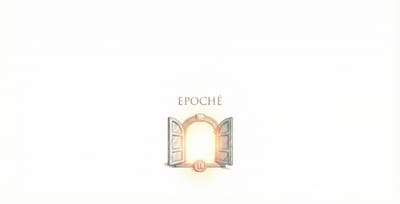
The Ten Modes are a checklist for inducing suspension of judgment (epoché) by demonstrating the relativity of all perception.
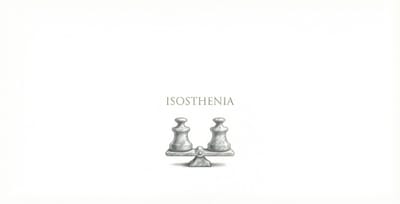
The Mechanism of Equipollence (Isostheneia):
The skeptic sets one appearance against another (the dog's view vs. the human's view). Since there is no neutral "Criterion of Truth" to decide between them (because the criterion itself is disputed), the mind is paralyzed. It cannot assent to either. This paralysis is epoché, which is followed naturally by ataraxia.
6.3 Agrippa and the Five Modes: The Logical Trap
While Aenesidemus focused on perception, a later skeptic named Agrippa (c. 1st century CE) developed the Five Modes, which attacked the structure of logical justification itself. These are considered the most devastating arguments against dogmatism ever devised.21
- Dissent (Diaphania): Philosophers disagree on everything. There is no consensus.
- Infinite Regress (Eis apeiron): Every proof requires a proof to validate it. That proof requires another proof, ad infinitum. Therefore, no foundation can ever be reached.
- Relativity (Pros ti): Objects appear differently based on context (reiterating Aenesidemus).
- Hypothesis (Ex hypotheseos): To stop the regress, the dogmatist makes an arbitrary assumption (an axiom) without proof. The skeptic rejects this as begging the question.
- Circularity (Diallelus): The proof relies on the conclusion (e.g., proving the reliability of the senses by appealing to sensory evidence).
The Agrippan Trilemma:
Combining Regress, Hypothesis, and Circularity, Agrippa creates a trap from which no dogmatic argument can escape. Any attempt to prove a truth must either go on forever, start from a guess, or argue in a circle.
6.4 Sextus Empiricus: The Physician of the Soul
Our encyclopedic source for all this is Sextus Empiricus (c. 2nd/3rd century CE). His name indicates his profession: he was a doctor of the Empiric school. The Empirics rejected "theoretical" medicine (speculating on hidden causes like atoms or humors) and relied solely on observation (tērēsis) and history. Sextus applied this medical methodology to philosophy.25
The Purgative Drug (Pharmakon):
Sextus famously compares skeptical arguments to a purgative drug (a laxative or emetic):
"For just as purgative drugs flush out the bodily humors and then are themselves evacuated along with the humors, so too the skeptical arguments cancel themselves out along with the dogmatic beliefs." 2
This metaphor is essential for understanding the self-consuming nature of skepticism. The skeptic does not assert "Proof is impossible" as a dogma (that would be negative dogmatism). The argument against proof is itself a proof, so it must also be false. But like the drug, it does its work of curing the disease (dogmatism) and then vanishes. It leaves behind no residue of belief, only the empty, healthy space of ataraxia.
Sextus frames skepticism as a form of Philanthropy. Just as a doctor seeks to cure bodily illness, the skeptic seeks to cure the "conceit and rashness" (oiesis) of the dogmatists, which causes mental suffering. He varies the strength of the argument ("the dose") depending on the severity of the dogmatic delusion.
Part VII: Modern Interpretations – Brochard and Conche
The 19th and 20th centuries saw a resurrection of interest in Pyrrhonism, moving it from a footnote in the history of logic to a central place in the history of metaphysics.
7.1 Victor Brochard: The Historian of Discontinuity
Victor Brochard’s seminal work, Les Sceptiques Grecs (1887), re-evaluated the skeptics with rigorous historical detail. Brochard challenged the view that skepticism was a monolithic tradition.5
The Thesis of Discontinuity:
Brochard argued that there is a fundamental break between Pyrrho and the later skeptics (Aenesidemus/Sextus).
- Pyrrho was a moralist, a practitioner of a "lived wisdom." He was indifferent to dialectic logic. His skepticism was an instinctual, almost mystical withdrawal from the world, influenced by Democritus’s ethics but rejecting his physics.
- The Later Skeptics were dialecticians. They built a logical superstructure (the Modes) around Pyrrho’s simple moral intuition. Brochard viewed this as a decline from the purity of the Pyrrhonian silence to the noise of the Academy.
- On India: Brochard was skeptical of the Indian connection, viewing Pyrrhonism as a purely Greek development rooted in the collapse of the Democritean system. He argued that the "indifference" could be fully explained by the internal logic of Greek thought without appealing to the Gymnosophists.5
7.2 Marcel Conche: The Metaphysics of Appearance
The French philosopher Marcel Conche, in his masterpiece Pyrrhon ou l'apparence (1973/1994), revolutionized the reading of Pyrrho by challenging the standard "Epistemological" interpretation.19
The Metaphysical Thesis:
Conche argues that Pyrrho was not saying "We cannot know reality." He was saying "There is no reality behind the appearance."
- Nihilism of the Object: By declaring things adiaphora (indifferent) and astathmeta (unstable), Pyrrho strips the world of its ontological weight. There are no Substances, no Essences, no Atoms, no Forms. There is only the flowing surface of the world.
- The Wisdom of Appearance: Standard philosophy dismisses appearance (phainomenon) as a veil hiding the truth. Conche argues that Pyrrho restores the dignity of appearance. Since there is no "Truth" behind the curtain, the curtain is the reality. We must live in the "World of Life" (Lebenswelt), accepting appearances as they are, stage-painting, without the neurotic need to find the "wood behind the canvas."
- The Death of the City: Conche contextualizes Pyrrho in the "Death of the Greek City" (Polis). With the rise of Alexander’s empire, the civic structures that gave life meaning collapsed. The gods of the city fell silent. Pyrrho represents the birth of the Absolute Individual, who, stripped of social and divine guarantees, must find salvation entirely within his own indifference. Pyrrho’s silence is the heroic response to the silence of the world.28
Conche vs. Brochard:
While Brochard sees Pyrrho as a moralist who used doubt, Conche sees him as a metaphysician who revealed the nothingness of Being. For Conche, Pyrrhonism is not just a cure for dogmatism; it is the only honest way to live in a world abandoned by the Absolute.
Conclusion: The Legacy of the Cure
The "Genealogy of Doubt" travels a long arc. It begins in the atomic void of Democritus, who saw the gap between sense and reality but tried to bridge it with the mind. It passes to Anaxarchus, who widened the gap, turning the world into a stage-play and teaching the indifference of the actor. It culminates in Pyrrho, who, tempered by the ascetic fires of India, abandoned the bridge entirely, realizing that the gap itself was the place of peace.
Timon armed this silence with satire. Aenesidemus and Agrippa built the fortress walls, the Modes, that made the suspension of judgment impregnable. Finally, Sextus Empiricus codified the pharmacy, turning the wild, existential indifference of the sage into a precise medical science of the mind.
In the modern readings of Brochard and Conche, we see that this ancient cure is not merely a historical curiosity. It is a profound engagement with the nature of reality. Conche’s Pyrrho teaches us that when we strip away the dogmas of religion, science, and ideology, we are left not with despair, but with the "divine liberty" of the appearance. We are free to live "undogmatically," following the customs of our time like a play we act in but do not believe, finding peace in the very instability of the world.
To be a skeptic is not to deny the world; it is to embrace it as it appears, without the burden of demanding it be something else. It is to find, in the heart of doubt, the quiet certainty of being alive.
Table 1: The Evolution of the Skeptical Criterion
Table 2: The Three Questions of Pyrrho (Aristocles Passage)
No spam, no sharing to third party. Only you and me.
Member discussion