
FinOps: The Unit Economics of Cloud

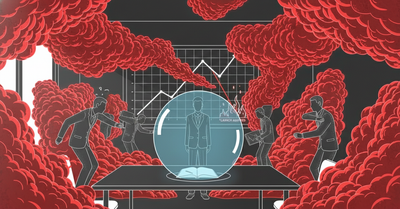
There is a panic attack that happens in every SaaS boardroom eventually.
The CFO walks in, holding the AWS invoice. It has doubled in six months.
They ask: "Why are we spending $50,000 a month on servers? We need to cut this by 20% immediately."
The CTO reacts defensively: "But we have more users! We need those servers!"
This is a dialogue of the deaf. The CFO is looking at OpEx. The CTO is looking at Scale.
Neither of them is looking at the truth.
The problem is that most companies treat Cloud Spend as a "Bill" to be minimized (like the electricity bill for the office).
In reality, Cloud Spend is COGS (Cost of Goods Sold). It is the raw material of your product.
FinOps is the discipline of fixing this conversation. It moves the goalpost from "Lowering the Bill" to "Optimizing the Unit Economics."
1. The Fallacy of "Total Cost"
Imagine you run a steakhouse.
- Scenario A: You spend $1,000 on beef. You sell 10 steaks.
- Scenario B: You spend $10,000 on beef. You sell 1,000 steaks.
If you only look at the "Total Bill," Scenario B looks like a disaster ("Our costs went up 10x!").
If you look at Unit Economics, Scenario B is a triumph (Your cost per steak dropped).
In Cloud, we obsess over the Total Bill. We celebrate when the bill is flat.
But a flat bill in a high-growth company is terrifying—it usually means you aren't acquiring customers. Conversely, a rising bill is only bad if it rises faster than your revenue.
The Golden Rule of FinOps:
Total Cloud Spend is a vanity metric. Unit Cost is the only metric that matters.

2. Defining the "Unit" (The Hard Part)
The reason companies fail at FinOps is that they don't know what "Unit" to apply.
AWS bills you for "EC2 Hours" and "S3 GBs."
But your CEO doesn't sell "GBs." They sell "Subscriptions," "API Calls," or "Orders."
You must build a Translation Layer. You need to map technical resources to business value.
- E-Commerce: Unit = "Order." (Cost per Order).
- Streaming: Unit = "Stream Hour." (Cost per Stream).
- B2B SaaS: Unit = "Active Tenant." (Cost per Customer).
Once you define this, you can stop asking "How do we save money?" and start asking "Why did our Cost Per Order jump from $0.05 to $0.08 last week?"
That is a debugging question, not a budgeting question.
3. The Iron Triangle: Speed, Quality, Cost
In traditional engineering, we say: "Fast, Good, Cheap. Pick two."
In FinOps, we acknowledge that Cost is a First-Class Metric, just like Latency or Uptime.
If an engineer ships a feature that makes the app 10% faster but 50% more expensive, is that a good feature?
- Without FinOps: "Yes! Look at that speed!" (The bill arrives 30 days later, shocking everyone).
- With FinOps: The engineer sees the cost impact before merging the code.
The Cultural Shift:
You must give engineers visibility into the costs they create.
If a developer spins up a massive database for a test environment and leaves it running over the weekend, that is $500 wasted.
If they see that cost on their own dashboard Monday morning, they fix it. If the bill goes to the CFO, nobody learns.
4. The Jevons Paradox in Cloud
There is a trap in optimization known as the Jevons Paradox.
"As technology increases the efficiency with which a resource is used, the total consumption of that resource increases rather than decreases."
If you optimize your image compression to make storage 50% cheaper, you might assume your bill will drop by 50%.
In reality, your Product Team might say: "Hey, storage is cheap now! Let's let users upload 4K video instead of 1080p."
Suddenly, your total bill goes up, because the lower unit cost unlocked new use cases.
This is good. This is growth.
But if you are strictly managing to a "Budget Cap," you will kill this innovation.
Summary
Stop trying to slash your AWS bill blindly. You might be cutting the muscle (Capacity) instead of the fat (Waste).
- Classify Cloud as COGS: It is the cost of doing business, not overhead.
- Measure Unit Cost: Track "Cost per Customer," not "Total Spend."
- Empower Engineers: Give them the price tag, and they will make rational decisions.
Your goal is not to spend less. Your goal is to make every dollar spend more efficient.
No spam, no sharing to third party. Only you and me.




Member discussion