
Dunbar’s Number: The Physics of Trust
There is a specific moment when a startup begins to feel "corporate."
It doesn’t happen at IPO. It doesn’t happen when you hire a HR Director.
It happens, almost mathematically, when the headcount crosses 150 people.
Suddenly, you don't know everyone's name in the elevator.
Suddenly, "doing the right thing" is replaced by "following the policy."
Suddenly, politics emerge.
This is not a failure of culture. It is a limitation of biology.
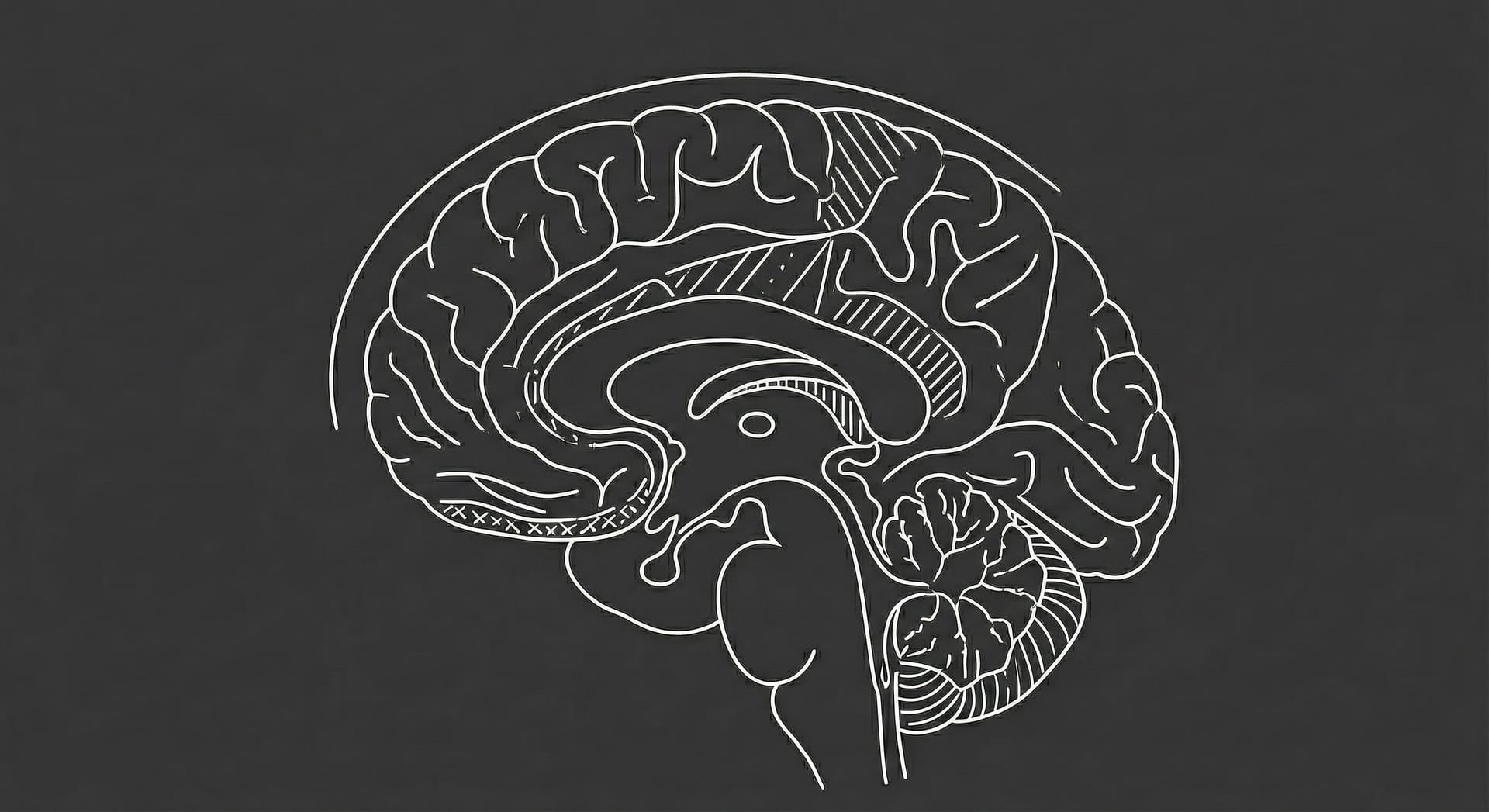
Robin Dunbar, a British anthropologist, proved that the human brain has a hard limit on the number of relationships it can maintain.1 We are not designed for the modern Enterprise. We are designed for the Village.
The "Chief Wise Officer" understands that you cannot scale a company linearly. You are fighting against millions of years of evolution.
1. The Giant: The Neocortex Limit
In the 1990s, Robin Dunbar was studying primates.2 He found a direct correlation between the size of a primate's neocortex (the thinking part of the brain) and the size of their social groups.
- Gorillas have small groups.
- Chimps have medium groups.
- Humans? Our hardware limit hits a wall at roughly 148 (rounded to 150).
This is Dunbar’s Number.
It is the cognitive limit to the number of people with whom you can maintain a stable social relationship.
"Stable" means you know who they are, you know how they relate to others, and—crucially—you have Reciprocal Trust.
The Executive Lesson:
You cannot "Slack" your way out of this. You cannot "Zoom" your way out of this.
Tools do not increase the size of the neocortex.
If your department has 200 people, it is biologically impossible for them to function as a single cohesive unit. They are a crowd, not a team.
2. The Layers of the Onion (5, 15, 50, 150)
Dunbar didn't just find one number. He found a series of fractal layers, each expanding by a factor of roughly 3.
Most organizational failures happen when we try to force a "Layer 50" group to act like a "Layer 5" group.
- Layer 5 (The Support Clique): These are your closest allies. In the military, this is the Fire Team. In software, this is the "Squad." They operate on telepathy. High trust, high bandwidth.
- Layer 15 (The Sympathy Group): Your extended team. In the military, the Section. You trust them, but you don't talk every day.
- Layer 50 (The Campsite): The Department. In the military, the Platoon. You know they are "us" (not "them"), but you don't know their kids' names.
- Layer 150 (The Tribe): The Company (at early stage). The Company (Military). The limit of face-to-face accountability.
The Trap:
When a startup hits 150, the CEO usually tries to maintain the "Family Vibe." They hold All-Hands meetings where everyone tries to talk. They try to keep the flat hierarchy.
This causes chaos.
Once you cross 150, you have exited the "Village" and entered the "City."
3. The "Trust vs. Process" Pivot
The most profound implication of Dunbar’s Number is the shift in how Control is maintained.
- Below 150 (The Trust Zone):Control is maintained through Peer Pressure and Reputation.If someone is lazy, the tribe notices, and they are socially shamed. You don't need an Employee Handbook; you just need eyes. "We all know what good looks like."
- Above 150 (The Bureaucracy Zone):Peer pressure breaks. You can now hide in the crowd.Since I don't know you personally, I cannot trust you implicitly.Therefore, I must implement Process.
- I need a travel policy (because I don't know if you're honest).
- I need performance reviews (because I don't see your work daily).
The Chief Wise Officer's Job:
Do not fight this transition. Acknowledge it.
The goal is not to stay a "Family" forever (that is a lie). The goal is to build a "Federation of Villages."
You must break the 500-person blob into autonomous 150-person units (Tribes) that have their own culture, own leadership, and own trust boundaries.
4. The Artifact: The Org-Layering Protocol
How do you structure communication so you don't violate these biological limits?
You must match the Meeting Type to the Dunbar Layer.
Most bad meetings happen because a Layer 50 group is trying to have a Layer 5 conversation (e.g., a 30-person "Brainstorming" session).
🛠️ Tool: The Org-Layering Protocol
Audit your recurring meetings against this table.
| Dunbar Layer | Max People | The Goal of Interaction | The Correct Ritual | The Failure Mode |
| The Fire Team | 3–5 | Execution. High-speed decision making. "How do we fix this bug?" | Daily Standup / DM Group. Unstructured, constant flow. | Too Formal. Waiting for a "weekly sync" to make a decision. |
| The Squad | 12–15 | Coordination. Aligning work streams. "Are we on track?" | Weekly Planning / Sprint Review. Structured agenda. | Too Large. If this group hits 20, silent passengers appear. Split the squad. |
| The Campsite | ~50 | Identity & Strategy. "Where are we going this month?" | Monthly Town Hall / Demo Day. Broadcast + limited Q&A. | The "Roundtable". Asking 50 people to "go around and give an update." (Death by boredom). |
| The Tribe | ~150 | Culture & Vision. "Who are we?" | Quarterly Offsite / Newsletter. High production value. Inspirational. | The "Open Floor". Thinking you can have a meaningful debate with 150 people. |
Summary
We often blame "Corporate Culture" for being slow and cold.
But it’s not culture; it’s math.
When you grow, you break the neurological bonds of trust.
If you ignore Dunbar’s Number, you get the worst of both worlds: The chaos of a startup with the slowness of a corporation.
Don't try to force 500 people to be friends.
Structure them into small squads where they can be friends, and align the squads with a clear vision.
Scale the Trust, not the Bureaucracy.
Further Reading
- "Grooming, Gossip, and the Evolution of Language" by Robin Dunbar. (The original science).
- "Team of Teams" by General Stanley McChrystal. (How the US Army applied Dunbar's logic to fight Al-Qaeda).
- "The Tipping Point" by Malcolm Gladwell.4 (Chapter on the Rule of 150).
No spam, no sharing to third party. Only you and me.

Member discussion