
Concept: Moloch — The God of Bad Incentives
Why do good companies release unsafe products?
Why do engineers work 80-hour weeks when even the CEO says they want "work-life balance"?
Why do we fill our software with ads until it becomes unusable?
We usually blame "Greed" or "Stupidity."
But often, the people making these decisions are neither greedy nor stupid. They are trapped.
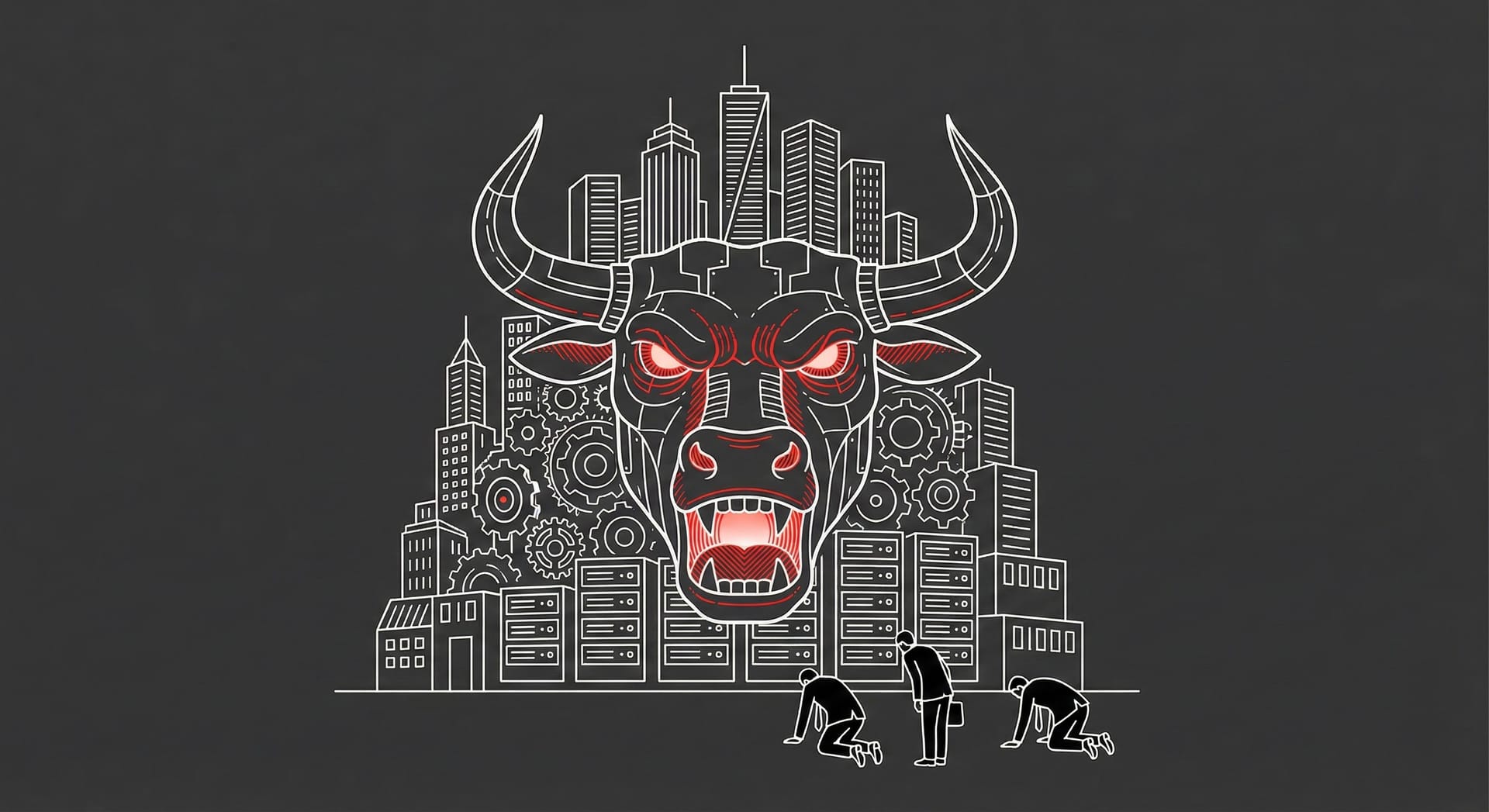
They are worshipping Moloch.
Moloch is an ancient Canaanite god associated with child sacrifice. In modern Silicon Valley philosophy (popularized by Scott Alexander’s essay Meditations on Moloch), he has become the personification of Coordination Failure.
Moloch is the god of "Bad Nash Equilibria." He is the force that compels decent people to do terrible things because the incentives of the system leave them no choice.
1. The Prisoner’s Dilemma
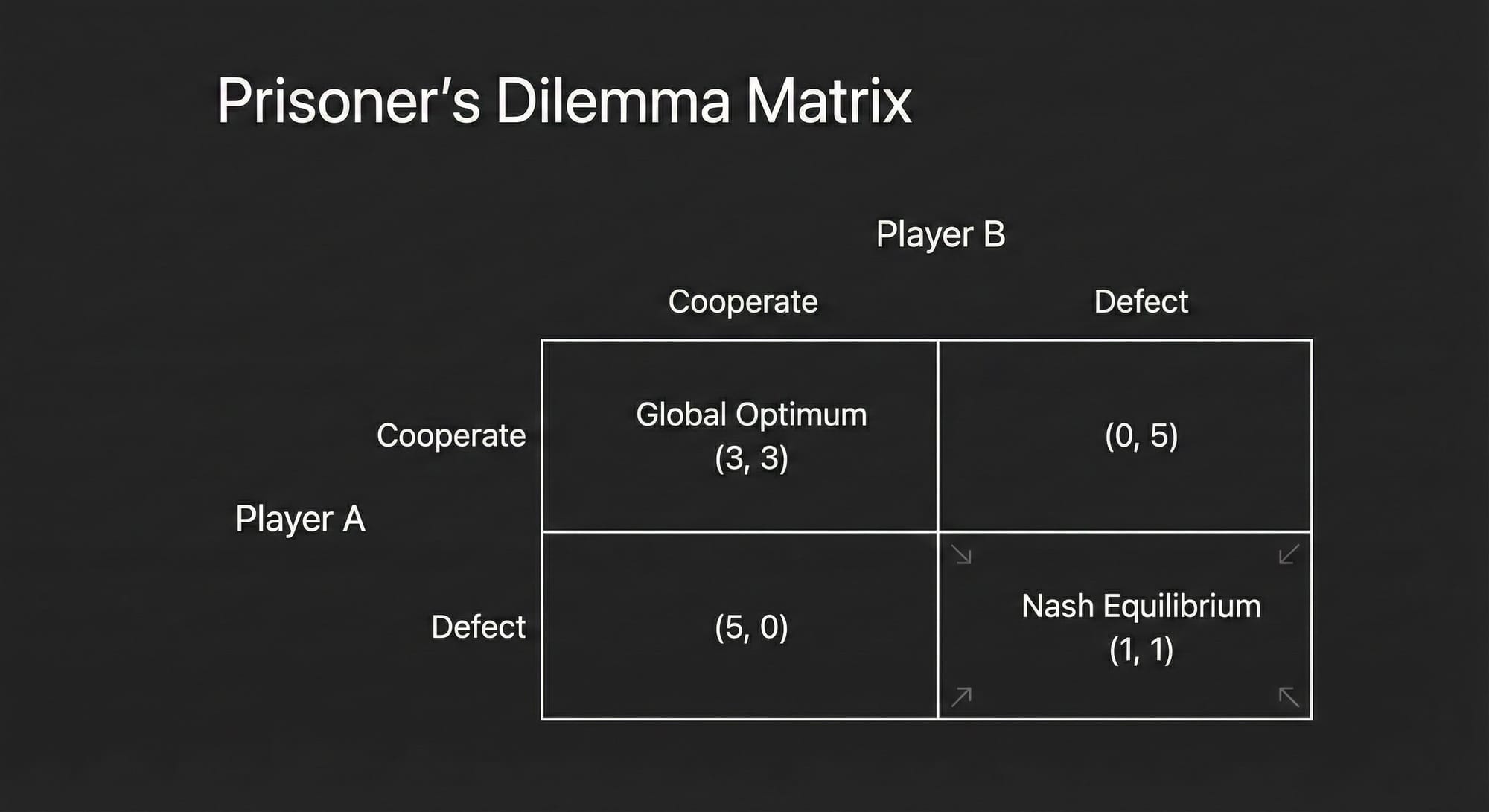
To understand Moloch, look at the classic Prisoner’s Dilemma.
Two prisoners can cooperate (stay silent) and get 1 year in jail, or defect (betray) and go free while the other gets 10 years.
If both defect, they both get 5 years.
- The Rational Move: Defect. (If I stay silent and you betray me, I am ruined. I must protect myself).
- The Result: Both defect. Both get 5 years.
- The Tragedy: If they could have just coordinated, they would have only served 1 year.
Moloch is the force that pushes them to the bottom right quadrant. Moloch is the unseen hand that says: "If you don't cut corners, your competitor will, and you will go out of business."
2. Moloch in the Boardroom: The "Race to the Bottom"
We see Moloch every day in the technology industry.
Example A: The AI Safety Race
Every AI lab (OpenAI, Google, Anthropic) says they care about safety. They all want to test their models for months before release.
- The Moloch Trap: If Google waits 6 months to test, and OpenAI releases now, OpenAI captures the market. Google becomes irrelevant.
- The Result: Everyone releases early. Safety is sacrificed. Not because they want to destroy the world, but because the system punishes patience.
Example B: The Feature Bloat
Everyone hates software that is cluttered with pop-ups and notifications. The Product Manager knows users hate it.
- The Moloch Trap: If we don't add "Growth Hacks," our metrics will look flat this quarter. Our competitor is using dark patterns to grow 10%.
- The Result: The product becomes unusable.
Moloch is the answer to the question: "Who actually wants this?"
The answer is: No one. But the system demands it.
3. The "Unlimited Vacation" Scam
Moloch also appears in culture.
Take "Unlimited Vacation" policies.
- Theory: "We trust you. Take as much time as you need."
- Reality: Since there is no fixed allotment (e.g., 4 weeks), no one knows what is "safe" to take.
- The Trap: If I take 4 weeks and my peer takes 0 weeks, I look lazy.
- The Result: Everyone takes 0 weeks. Everyone burns out. The company saves money on paid leave liability.
This is a Coordination Problem. Without a clear rule (a treaty), the rational individual action (work more to signal loyalty) leads to a collective disaster (burnout).
4. How to Slay the God (Coordination Mechanisms)
You cannot defeat Moloch by being "nicer." You cannot defeat him with "Values Statements."
You defeat him with Coordination Mechanisms. You must change the payoffs of the game.
A. Regulation (The Leviathan)
In the Prisoner's Dilemma, the only way to get the "1 Year" outcome is if a Mafia Boss threatens to kill anyone who talks.
In tech, this is GDPR or FDA approval.
If the government says "Anyone who releases unsafe AI goes to jail," then Google and OpenAI can finally relax. They no longer have to race; they can focus on safety without fearing they will lose the market.
Regulation is a treaty against Moloch.
B. The "Bar Raiser" (Internal Culture)
As discussed in our Hiring article, managers are incentivized to hire B-players (to fill seats fast).
The "Bar Raiser" (with veto power) is an anti-Moloch mechanism. It changes the game so that "Filling the seat with a bozo" is no longer a valid move.
C. Transparency (Killing the Secret)
Moloch thrives in the dark.
If salaries are secret, Moloch wins (everyone is underpaid).
If salaries are transparent (like at Buffer or Gitlab), Moloch dies. You cannot play games when the board is visible to everyone.
Summary
The next time you see a systemic failure—a toxic culture, a broken product, a dangerous industry trend—do not ask: "Which bad person did this?"
Ask: "What are the incentives?"
If the system rewards bad behavior, good people will do bad things.
You cannot wish Moloch away. You must bind him with rules, treaties, and structure.
As Scott Alexander wrote:
"Moloch is not the enemy. Moloch is the battlefield."
No spam, no sharing to third party. Only you and me.





Member discussion