
Benedictus de Spinoza: The Geometer of Liberty
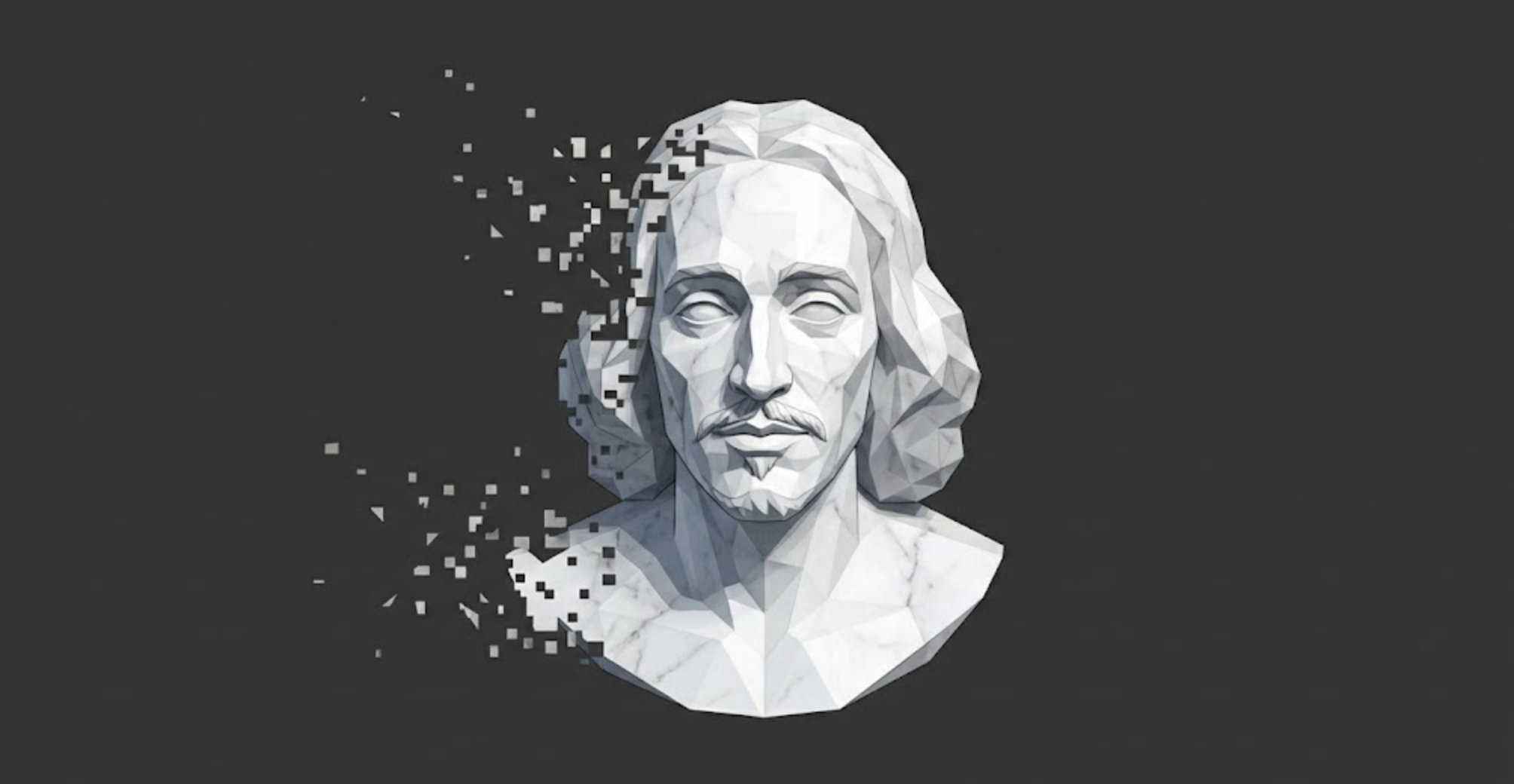
Life, Philosophy, and Legacy of the "Prince of Philosophers"
Introduction: The Absolute Philosopher
In the grand architecture of Western thought, Baruch Spinoza stands as a singular, monolithic figure, a thinker whose system is so complete, so radical, and so mathematically precise that it remains, three and a half centuries later, the "testing-point" of modern philosophy. As the German idealist Georg Wilhelm Friedrich Hegel famously declared in his lectures on the history of philosophy, "You are either a Spinozist or not a philosopher at all". This ultimatum suggests that Spinoza did not just contribute to the canon; he redefined the very conditions of philosophical possibility. To ignore him is to ignore the fundamental questions of substance, existence, and freedom.
The French philosopher Gilles Deleuze, instrumental in the 20th-century revival of Spinoza, offered two distinct epithets that frame our understanding. In his early work, he referred to Spinoza as the "prince of philosophers," a nod to the aristocratic elevation of his concepts. Yet, in his later collaboration with Félix Guattari, What is Philosophy?, he elevated Spinoza further, calling him the "Christ of philosophers". This was not a religious conversion but a philosophical recognition: just as Christ incarnated the divine, Spinoza incarnated the philosophy of immanence. He was, Deleuze argued, the only philosopher never to have compromised with transcendence, hunting it down in every corner of ethics, politics, and ontology.
We will traverse the trajectory of this "absolute philosopher," from the trauma of the Portuguese-Jewish community in Amsterdam to the mathematical rigors of the Ethics, and finally to his enduring legacy as the patron saint of scientific rationalism.
Part I: The Marrano Crucible and the Formation of a Heretic
1.1 The Double Consciousness of the Portuguese Nation
To understand the radical unity of Spinoza's philosophy, one must first confront the fractured world into which he was born. Bento (Baruch) de Spinoza was born on November 24, 1632, in Amsterdam, into a community defined by exile and memory. He was a child of the "Portuguese Nation", the Sephardic Jewish community composed largely of conversos (Marranos) who had fled the inquisitions of the Iberian Peninsula. These families had lived for generations as public Catholics while maintaining a secret, often fragmentary, Jewish identity. Upon arriving in the relatively tolerant Dutch Republic, they sought to reclaim their ancestral faith.
However, this reclamation was fraught with anxiety. The community was reconstructing its orthodoxy from texts and memory, deeply insecure about its standing in a Calvinist land. They were tolerated by the Dutch authorities on the implicit condition that they police their own and cause no theological scandal. This collective psychological state, a "double consciousness" of persecution and performative orthodoxy, is the crucial context for Spinoza’s later expulsion. The community was not only religious; it was a mercantilist corporation and a defensive citadel. It could not afford the luxury of internal dissent.
Spinoza's father, Michael d’Espinosa, was a successful merchant within this enclave. The family business, which young Bento would eventually lead, dealt in the import of dried fruit and other colonial goods, linking the Spinoza household to the vast trade networks of the Dutch empire. But the prosperity of the "Golden Age" was volatile. The First Anglo-Dutch War (1652–1654) devastated the Dutch merchant marine. English ships captured cargoes and disrupted trade routes, plunging the Spinoza firm into severe debt. By the time Michael died in 1654, the business was structurally unsound, saddled with liabilities that would eventually force Spinoza to relinquish his inheritance to satisfy creditors.
This economic collapse coincided with Spinoza's intellectual awakening. The young Bento was a gifted student at the Talmud Torah school, but contrary to the persistent myth that he was being groomed for the rabbinate, he never advanced to the higher levels of the curriculum that involved intensive Talmudic study. Instead, at the age of 17, his formal religious education was curtailed to help salvage the family enterprise. It was in the marketplaces of Amsterdam, rather than the synagogue, that Spinoza first encountered the wider world.
1.2 The School of Francis van den Enden
The decisive rupture with orthodoxy began not with a specific theological dispute, but with a linguistic one. Needing to learn Latin, the lingua franca of European science and diplomacy, Spinoza enrolled in the school of Francis van den Enden around 1654. Van den Enden was no ordinary tutor; he was a former Jesuit, a radical egalitarian, and a suspected atheist who would later be executed in France for conspiring against Louis XIV.
In Van den Enden’s classroom, Spinoza was exposed to the "new philosophy" of René Descartes, which was then sweeping through the Dutch universities. He encountered the mechanical philosophy that viewed nature not as a realm of spirits and purposes, but as a system of matter in motion governed by mathematical laws. Perhaps even more dangerously, he encountered democratic political theories that challenged the monarchical and theocratic assumptions of the age. It was here that the merchant Bento began to transform into the philosopher Benedictus.
1.3 The Herem: The Anatomy of an Expulsion
The tension between Spinoza's evolving worldview and the rigid requirements of the Portuguese community came to a head in the summer of 1656. On the 6th of Av, 5416 (July 27, 1656), the Senhores of the Ma'amad (the lay governing board of the congregation) issued the writ of herem (excommunication). It remains the harshest ban ever pronounced by the Sephardic community of Amsterdam, and unlike most disciplinary bans of the era, it was never rescinded.
The text of the herem is a document of extraordinary ferocity. It was read aloud from the Ark in the synagogue, a ritual designed to strike terror into the congregation:
"The Lords of the Ma'amad, having long known of the evil opinions and acts of Baruch de Spinoza, have endeavored by various means and promises, to turn him from his evil ways. But having failed to make him mend his wicked ways, and, on the contrary, daily receiving more and more serious information about the abominable heresies which he practiced and taught and about his monstrous deeds... have decided... that the said Espinoza should be excommunicated and expelled from the people of Israel."
The ban continues with a litany of curses that invoke the full weight of biblical wrath:
"Cursed be he by day and cursed be he by night; cursed be he when he lies down and cursed be he when he rises up. Cursed be he when he goes out and cursed be he when he comes in. The Lord will not spare him... We warn you that none may speak with him by word of mouth, nor by writing, nor show any favor to him, nor be under one roof with him, nor come within four cubits of him, nor read any paper composed or written by him."
The Reason for the Ban: The document cites "abominable heresies" and "monstrous deeds" but, frustratingly for historians, does not explicitly list them. However, scholarly consensus, reconstructed from reports of Spinoza's conversations at the time and the content of his later writings, points to three specific denials that would have been intolerable:
- The Denial of the Immortality of the Soul: Spinoza likely argued that the soul dies with the body, or at least that the personal personality does not survive.
- The Denial of a Providential God: He rejected the God of Abraham, Isaac, and Jacob, a God who hears prayers and acts in history, in favor of a God identical to Nature.
- The Denial of the Divine Origin of the Law: He claimed that the Law of Moses was a political constitution for the ancient Hebrew state, not an eternal metaphysical truth binding on modern Jews.
Spinoza's Reaction: The traditional narrative portrays the excommunication as a devastating tragedy. Yet, early biographical accounts suggest Spinoza received the news with a stoic, almost relieved equanimity. He is reported to have said, "All the better; they do not force me to do anything that I would not have done of my own accord if I did not dread scandal". He did not contest the ban. He did not seek readmission. Instead, he embraced his status as an outcast, latinizing his name to Benedictus (the blessed one) and stepping fully into the secular republic of letters.
Part II: The Artisan of Glass and the Scientific Revolution
2.1 Beyond the "Lonely Lens Grinder"
Following his expulsion, Spinoza eventually settled in the village of Rijnsburg (1661) and later Voorburg (1663), before moving to The Hague. To support himself, he took up the trade of lens grinding. A persistent romantic myth portrays this as a humble, mindless toil performed by a philosopher seeking solitude. This view is fundamentally incorrect. In the 17th century, optics was "big science." It was the frontier of technology, comparable to quantum computing or genetic engineering today. To be a master lens grinder was to be at the intersection of advanced mathematics, physics, and engineering.
Spinoza was not a dabbler; he was an expert. His lenses were highly sought after by the leading scientists of Europe. The diplomat and poet Constantijn Huygens (father of the astronomer Christiaan) praised the clarity of Spinoza’s lenses. The philosopher Leibniz, during a visit, acknowledged Spinoza's proficiency in optics. When Spinoza died, his estate included a sophisticated workshop: "instruments for grinding," "great and small metal dishes," and multiple telescopes and microscopes. The inventory lists imply a "rather thorough industrial investment," suggesting Spinoza was running a small but high-end optical production facility, not just grinding spectacles for neighbors.
2.2 The Microscope and the "Bead Lens"
Recent scholarship has highlighted Spinoza's involvement in the development of the microscope. During the 1660s, there was a technical debate between the use of compound microscopes (using multiple lenses) and simple microscopes (using a single, high-curvature lens). The compound microscopes of the time suffered from severe chromatic aberration.
Spinoza, alongside his friend Johannes Hudde, advocated for the single-lens approach using small spherical lenses (bead lenses). These lenses, though difficult to use, offered superior resolution and magnification power. It was this technology that later allowed Antonie van Leeuwenhoek to discover microorganisms. Evidence suggests that the Huygens family may have purchased Spinoza’s grinding equipment after his death, and Christiaan Huygens later adopted the very "bead lens" technique Spinoza had championed, leading to his own advanced microscopic observations in 1678.
2.3 The Huygens Connection: Correcting the Saturn Narrative
Any biography of Spinoza must carefully navigate his relationship with Christiaan Huygens, the Dutch astronomer who discovered the rings of Saturn.
- The Discovery (1655): Huygens discovered the moon Titan and the true nature of Saturn’s rings in 1655–1656. He did this using lenses he ground himself (with his brother Constantijn), using a new polishing method. Correction: Spinoza did not grind the lens for this discovery. At this time, Spinoza was still in Amsterdam, just beginning his separation from the Jewish community, and had not yet established his reputation as a lens grinder.
- The Collaboration (1665–1666): Spinoza and Christiaan Huygens became neighbors in Voorburg a decade later. During the summer of 1665, they engaged in intense daily discussions regarding dioptrics, the mathematics of lens curvature, and the rings of Saturn, which were still a subject of controversy. Spinoza’s letters from this period reveal a man deeply engaged in the empirical verification of the Copernican hypothesis. He describes observations of Jupiter’s eclipses and the shadows cast by Saturn’s rings, observations that required state-of-the-art equipment.
- The Significance: The relationship was one of mutual respect but philosophical divergence. Huygens respected Spinoza’s craftsmanship and mathematical acuity but was often baffled by his metaphysical abstractions. Conversely, Spinoza criticized Huygens’ reliance on certain mechanical assumptions. Yet, their friendship proves that Spinoza was not a mystic theorizing in a void; he was testing his philosophy against the rigorous standards of the leading empirical scientist of the age.
2.4 The Medical Reality: Tuberculosis vs. Silicosis
Spinoza died on February 21, 1677, at the age of 44. The cause of his death has been the subject of much speculation, often serving a metaphorical function in his biography. The popular narrative attributes his death to silicosis, a lung disease caused by the chronic inhalation of glass dust from his lens grinding. This theory appeals to the romantic notion that Spinoza was "killed by his art", that the very medium of his clarity consumed him.
However, a rigorous review of the medical evidence points to a different primary cause: pulmonary tuberculosis (historically known as phthisis).
- Chronic Progression: Early biographers, including Colerus, explicitly state that Spinoza had suffered from phthisis for twenty years prior to his death. This timeline dates the onset of his symptoms to around 1656, arguably before his intensive engagement with professional lens grinding began.
- Hereditary Vulnerability: Respiratory illness decimated the Spinoza family. His mother died young, as did his siblings. This pattern strongly suggests a familial susceptibility to tuberculosis, which was endemic in the crowded urban centers of the 17th century.
- The Role of Dust: While glass dust was likely a contributing factor, it was probably not the primary killer. Modern pulmonology suggests a diagnosis of silico-tuberculosis, where the inhalation of silica dust damages the lungs' immune defenses, making the patient significantly more susceptible to tuberculosis infection and accelerating its progression. Hence, Spinoza was not a victim of occupational hazard; he was a casualty of the biological reality of his time, his condition exacerbated by his dedication to his scientific craft.
Part III: The Metaphysics of Immanence (The Ethics)
Spinoza’s philosophy finds its ultimate expression in the Ethica, ordine geometrico demonstrata (Ethics, Demonstrated in Geometrical Order). Published posthumously in 1677, this text is a towering edifice of reason, attempting to explain the nature of God, the human mind, the emotions, and the path to freedom using the axioms and propositions of Euclidean geometry.
3.1 The Geometric Method: The Architecture of Necessity
Why did Spinoza choose to write a book on ethics as if it were a geometry textbook? This was not from stylistic affectation. It was a profound methodological statement. For Spinoza, the universe is not governed by the whims of a capricious deity or the randomness of chance. It is governed by absolute, logical necessity.
Spinoza believed that the order of causes in the physical world is identical to the order of logical implications in thought. Just as the properties of a triangle flow necessarily from the definition of a triangle, so too do all events in the universe flow necessarily from the nature of God. If reality is rational through and through, then the only proper way to describe it is through a deductive proof. The geometric method is Spinoza's way of asserting that ethics is objective science. We can understand the laws of human emotion with the same precision that we understand the laws of physics.
3.2 Deus sive Natura: The Formula of Radical Monism
The bedrock of Spinoza’s system is the concept of Substance. In the Cartesian philosophy that Spinoza studied and critiqued, there were created substances (minds and bodies) and an uncreated substance (God). Spinoza rejected this plurality. He argued that if Substance is truly independent and self-sufficient, there can only be one.
- Proposition 14, Part I: "Except God, no substance can be or be conceived."
- The Identity: This leads to the famous formula Deus sive Natura, "God, or Nature." God is not a transcendent creator standing outside the world; God is the world. God is the immanent cause of all things, meaning he is in the world as the laws of physics are in matter.
- Attributes: If there is only one substance, what are Mind and Body? Spinoza answers that these are Attributes of God. An attribute is what the intellect perceives of substance as constituting its essence. Humans perceive two attributes: Extension (physical matter) and Thought (ideas). These are not two separate things interacting (as in Descartes' dualism), but one and the same thing viewed from two different perspectives. A brain firing (Extension) and the corresponding thought (Thought) are the same event under different descriptions.
3.3 Causa Sui and the Illusion of Free Will
The concept of causa sui (cause of itself) is central to Spinoza's understanding of freedom.
- Definition: "By cause of itself I understand that whose essence involves existence, or that whose nature cannot be conceived except as existing" (Ethics I, Def 1).
- Application: Only God/Nature is causa sui. God exists by his own power and acts solely according to the laws of his own nature. Nothing external compels God.
- Finite Modes: Humans, however, are "finite modes." We are not causa sui. We are caused by external things (parents, environment, biology). Therefore, Spinoza argues, libertarian free will is an illusion. We think we are free because we are conscious of our actions but ignorant of the causes that determine them. A stone thrown through the air, if it were conscious, would think it was flying of its own free will. Humans are that stone.
3.4 The Psychology of Freedom: Affects and Reason
If we are determined, how can we be free? Spinoza redefines freedom not as the capacity to choose, but as the capacity to understand.
- Passions vs. Actions: Spinoza distinguishes between passive emotions (passions) and active emotions (actions). A passion (like anger or fear) is an idea that is caused by external things acting upon us. We are passive; we suffer. An action is an idea that is caused by our own power of reason.
- Therapy of Reason: We become free when we transform our passions into actions. We do this by forming "clear and distinct ideas" of our emotions. When we understand why we are angry (tracing the causal chain), the emotion ceases to be a blind passion and becomes an object of the mind. This understanding reduces the power of the external cause over us.
- Autonomy: Freedom, then, is autonomy. It is the state of being active rather than passive. The free man is the one who lives according to the guidance of reason, acting from the laws of his own nature rather than reacting to external stimuli.
3.5 Sub Specie Aeternitatis and the Intellectual Love of God
The pinnacle of the Ethics is the "Intellectual Love of God" (Amor Dei Intellectualis). This is the state of blessedness achieved by the mind that understands reality sub specie aeternitatis, "under the aspect of eternity".
- The Perspective: To view things in time (sub specie durationis) is to see them as contingent, fleeting, and often tragic. We mourn the loss of a loved one because we see it as a specific, terrible event in time.
- The Eternal View: To view things sub specie aeternitatis is to understand that this event follows necessarily from the eternal attributes of God. It could not have been otherwise. It is a part of the eternal structure of reality.
- The Result: This is not a cold resignation, but a profound affirmation. By understanding the necessity of all things, the mind aligns itself with the eternal order. It ceases to fight against reality. The "Intellectual Love of God" is the joy that arises from this understanding, a joy that is "continuous and supreme" because it depends on the eternal (God), which cannot be taken away, rather than the transient.
Part IV: The Political Radical (The Tractatus Theologico-Politicus)
While the Ethics was written for the ages, the Tractatus Theologico-Politicus (TTP) was written for the crisis of the moment. Published anonymously in 1670, it was a direct intervention in the volatile politics of the Dutch Republic. The liberal republican faction, led by Johan de Witt, was under siege by orthodox Calvinist monarchists who sought to install the Prince of Orange and impose strict religious censorship. Spinoza wrote the TTP to defend the "freedom to philosophize" as essential for the peace and piety of the state.
4.1 The Scandal of Biblical Criticism
The TTP was arguably the first work of modern biblical criticism. Spinoza approached the Bible not as a divine artifact, but as a historical text produced by human authors.
- Prophecy as Imagination: Spinoza argued that the prophets were not philosophers with superior intellects. They were men of vivid imagination who conveyed moral truths (charity and justice) in a language suited to the uneducated masses of their time.
- Miracles: Spinoza denied the possibility of miracles. Since God's will is identical to the laws of nature, a violation of the laws of nature would be a contradiction in God. Stories of miracles, he argued, were either misunderstandings of natural phenomena or poetic exaggerations.
- The Separation Thesis: The central aim of the TTP was to separate philosophy from theology. Theology demands obedience and piety; philosophy demands truth and reason. The two operate in different domains and should not interfere with each other. This argument struck at the heart of the theocratic claim that the Bible should dictate scientific or political truth.
4.2 Freedom of Speech as State Security
Spinoza’s defense of civil liberties in Chapter 20 of the TTP is one of the most powerful in the history of political thought. Unlike Hobbes, who argued that the sovereign must control speech to prevent chaos, Spinoza argued that suppressing speech creates chaos.
- The Argument: It is impossible to control people's minds completely. If the state forces men to speak against what they believe, it creates a nation of hypocrites and sycophants. This weakens the state's moral authority.
- The Conclusion: "The ultimate purpose of the state is not to dominate... but to free every man from fear so that he may live with full security... The purpose of the state is, in reality, freedom" (Finis reipublicae libertas est). Spinoza concluded that a government that attempts to control men's minds is tyrannical, and will inevitably face rebellion.
Part V: The Final Years and the Unfinished Revolution
5.1 The Year of Disaster (1672)
The fragile tolerance that allowed Spinoza to write collapsed in 1672, the Rampjaar (Year of Disaster). The French armies of Louis XIV invaded the Dutch Republic. In the ensuing panic, a mob lynched Spinoza’s political protector, the Grand Pensionary Johan de Witt, and his brother Cornelis.
- Spinoza’s Rage: Legend has it that Spinoza, usually the master of his emotions, was so enraged by the lynching that he prepared a placard reading Ultimi Barbarorum ("The Lowest of Barbarians") and attempted to post it at the site of the murders. He was only stopped by his landlord, who locked him in the house, likely saving his life.
- Retreat: The political climate turned sharply reactionary. Spinoza realized that publishing his Ethics was now impossible. He retreated further into his work, focusing on the unfinished Tractatus Politicus.
5.2 The Tractatus Politicus and Democracy
In his final years, Spinoza worked on the Political Treatise (TP). Unlike the TTP, which focused on religion, the TP was a strictly secular analysis of state structures.
- Right is Power: Spinoza radicalized Hobbes’s natural right theory. He argued that an individual’s natural right extends exactly as far as their power extends (tantum juris quantum potentiae). Fish have the "right" to swim, and big fish have the "right" to eat small fish, simply because they have the power to do so.
- The Power of the Multitude: In a civil state, the sovereign’s right is nothing more than the aggregated power of the multitude. If the multitude becomes angry or fearful, the sovereign loses power, and thus loses the "right" to rule.
- Democracy: Spinoza began the chapter on Democracy but died before completing it. However, the trajectory of his thought is clear: he viewed democracy as the most absolute form of government because it identifies the sovereign most closely with the entire power of the multitude, making it the most stable and rational regime.
Part VI: The Legacy: "Testing-Point" of Philosophy
6.1 The "Prince" and the "Christ"
The reception of Spinoza has oscillated between revulsion and reverence. For a century after his death, he was treated as a "dead dog," a symbol of atheism and immorality. The revival began with the German Romantics (Lessing, Goethe, Novalis) in the late 18th century.
In the 20th century, the French philosopher Gilles Deleuze cemented Spinoza’s status as the ultimate philosopher of modernity. Deleuze used two powerful metaphors:
- "Prince of Philosophers": In Expressionism in Philosophy: Spinoza, Deleuze calls him the "prince" because of his conceptual elevation.
- "Christ of Philosophers": In What is Philosophy?, Deleuze writes: "Spinoza is the Christ of philosophers, and the greatest philosophers are hardly more than apostles who distance themselves from or draw near to this mystery".
- Interpretation: For Deleuze, Spinoza is "Christ" because he achieves the pure plane of immanence. He saves philosophy from the transcendent illusions of judgment, sin, and negativity. He offers a path of salvation through the body and the mind in this world, not the next.
6.2 Hegel's Ultimatum
Georg Wilhelm Friedrich Hegel, the giant of German Idealism, recognized Spinoza as his primary precursor. He famously stated: "Spinoza is made a testing-point in modern philosophy, so that it may really be said: You are either a Spinozist or not a philosopher at all".
- The Logic: For Hegel, philosophy begins with the concept of the Infinite Substance. Spinoza was the first to fully articulate this. Hegel believed Spinoza's system was perfect but static; it lacked the dynamic "Negativity" of the Subject. Hegel sought to set Spinoza's substance in motion, but he acknowledged that without Spinoza, there is no foundation to move from.
6.3 Einstein's Credo
Perhaps the most famous modern Spinozist was Albert Einstein. In 1929, Rabbi Herbert S. Goldstein sent him a telegram asking: "Do you believe in God? Stop. Answer paid 50 words." Einstein replied:
"I believe in Spinoza's God who reveals himself in the orderly harmony of what exists, not in a God who concerns himself with fates and actions of human beings."
For Einstein, Spinoza provided the spiritual framework for science. The "cosmic religious feeling", the awe at the mathematical beauty of the universe, was for Einstein the strongest and noblest motive for scientific research. Spinoza was the prophet of this scientific sacrament.
Part VII: Complete Bibliography of Primary Works
For scholars and readers of lejay.io seeking to engage with Spinoza’s original texts, the following bibliography lists the definitive first editions. Note that the majority of his work was published posthumously in the Opera Posthuma of 1677 to avoid censorship.
Annotated Guide to the Works
1. Korte Verhandeling van God, de Mensch en deszelfs Welstand (Short Treatise on God, Man, and His Well-Being)
- Date: c. 1660–1662 (Written).
- History: This early work was not published in Spinoza’s lifetime and was considered lost until two Dutch manuscripts were discovered in the 19th century. It represents an early draft of the Ethics, containing the core ideas of substance monism but lacking the geometric rigor of the later work.
2. Tractatus de Intellectus Emendatione (Treatise on the Emendation of the Intellect)
- Date: c. 1662 (Written).
- History: An unfinished discourse on method. Spinoza attempts to distinguish between different forms of knowledge (hearsay, loose experience, inference, and intuition) to find the best path to truth. It serves as the epistemological prelude to the Ethics.
3. Renati Des Cartes Principiorum Philosophiae (Descartes' Principles of Philosophy)
- Date: 1663 (Published).
- History: The only work published under Spinoza’s own name during his lifetime. It is a geometric exposition of Descartes’ physics and metaphysics. Crucially, it includes an appendix, the Cogitata Metaphysica (Metaphysical Thoughts), where Spinoza subtly introduces his own divergences from Cartesianism.
4. Tractatus Theologico-Politicus (Theologico-Political Treatise)
- Date: 1670 (Published).
- History: Published anonymously with a false "Hamburg" imprint to evade Dutch censors. It is a defense of secular government and freedom of speech, grounded in a critique of religious authority.
5. Ethica, ordine geometrico demonstrata (Ethics)
- Date: 1677 (Posthumous).
- History: Spinoza’s masterpiece. He withheld it from publication during his life due to the threat of persecution. It was published by his friends in the Opera Posthuma months after his death.
6. Tractatus Politicus (Political Treatise)
- Date: 1677 (Posthumous).
- History: Unfinished at the time of his death. It outlines his mature political theory, focusing on the stability of monarchies, aristocracies, and democracies.
7. Compendium Grammatices Linguae Hebraeae (Compendium of Hebrew Grammar)
- Date: 1677 (Posthumous).
- History: An unfinished philological work where Spinoza attempts to treat the Hebrew language naturalistically, analyzing it as a human construct rather than a sacred tongue.
8. Epistolae (Correspondence)
- Date: 1677 (Posthumous).
- History: Spinoza’s letters are vital for understanding his system. They include exchanges with Henry Oldenburg (Secretary of the Royal Society), Hugo Boxel (on ghosts), and Ehrenfried Walther von Tschirnhaus (on physics). They clarify many of the more difficult passages of the Ethics.
Conclusion: The Fortress of Sanity
Spinoza’s life was a sustained act of intellectual courage. He stripped away the comforting illusions of his age the personal God, the immortal soul, the divine right of kings, and the exceptionalism of humanity, not to destroy meaning, but to find a bedrock of truth that could not be shaken.
He remains relevant not just as a historical curiosity, but as a therapeutic resource. In an era of political polarization, fake news, and religious extremism, Spinoza offers a model of the mind that fights for clarity against the chaos of the passions. He teaches that freedom is not the ability to do whatever we want, but the strength to understand what we are. To read Spinoza is to enter a "fortress of sanity", a place where the mind, stripped of fear and hope, can finally rest in the contemplation of the eternal.
This report confirms that Spinoza is indeed the "Prince" of philosophers, sovereign, autonomous, and ruled by no law but the necessity of his own nature.
No spam, no sharing to third party. Only you and me.

Member discussion