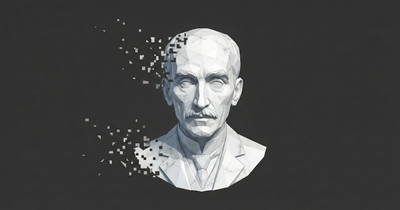
The Architect of Duration: Henri Bergson’s Life, Philosophy, and Legacy
Before the Beatles, there was Bergson. From the "Bergsonism" mania of the 1900s to his historic debate with Einstein, this biography explores why the philosopher of "Duration" is the missing link for modern leadership and the age of AI.
Lexicon: Durée (Duration)
Henri Bergson's concept of "La Durée" explains why a 5-minute interruption destroys hours of work. The difference between "Clock Time" and "Real Time."
Lexicon: Determinism
Why "Free Will" is a dangerous illusion in management. Spinoza's concept of Determinism teaches us to stop blaming people and start fixing systems.
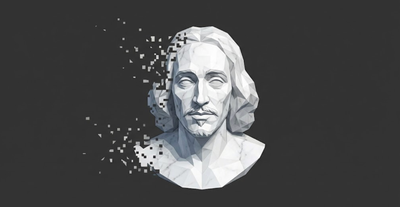
Benedictus de Spinoza: The Geometer of Liberty
Explore the life of Baruch Spinoza, from his 1656 excommunication to his optical work with Christiaan Huygens. Discover the man who equated God with Nature.
Lexicon: Potentia (vs. Potestas)
Do you have power over people (Potestas) or power to act (Potentia)? Spinoza's critical distinction for modern leadership.
Lexicon: Causa Sui
Spinoza's definition of true power. Why the goal of every strategy should be to move from "Dependency" to being "Causa Sui" (The Cause of Itself).
Conatus: The Unstoppable Will to Persist in Business
Why do "Zombie Projects" refuse to die? The Chief Wise Officer looks at Spinoza's law of Conatus to understand the hidden physics of organizational resistance.
Lexicon: Sub Specie Aeternitatis
Spinoza's ultimate mental tool. Why viewing your quarterly crisis "under the aspect of eternity" is the only way to maintain strategic sanity.
Lexicon: The Sacred Yes (Heiliges Ja)
The Lion says "No" to gain freedom, but only the Child says "Yes" to create value. Nietzsche's guide to moving from burnout to breakthrough.
Amor Dei: Why You Should Love the Algorithm (And the Crash)
Spinoza was not "happy"; he possessed "Beatitudo." Why the lens-grinder's concept of the "Intellectual Love of God" is the ultimate cure for executive burnout.
Lexicon: The Sacred No (Heiliges Nein)
Nietzsche called it the "Sacred No." Why saying "No" to clients, features, and meetings is the only way to seize your freedom and define your strategy.
Lexicon: Solitude
A man can be himself only so long as he is alone." A deep look at why Schopenhauer, Nietzsche, and Arendt believed Solitude was the prerequisite for genius.
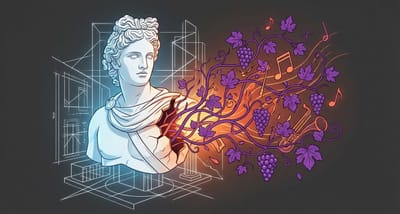
Apollo vs. Dionysus: Why Your Company Needs Both Order and Chaos
Nietzsche's "Birth of Tragedy" explains the eternal war between Order (Apollo) and Chaos (Dionysus). Why the best companies are a marriage of the Spreadsheet and the Spark.
Lexicon: The Hedgehog's Dilemma
Why does "teamwork" often feel so painful? Schopenhauer's concept of the Hedgehog's Dilemma explains the trade-off between connection and friction.
Lexicon: Memento Mori
It's not about being morbid. It's about focus. Why Socrates believed philosophy was "practicing death," and how the "Pre-Mortem" can save your next project.
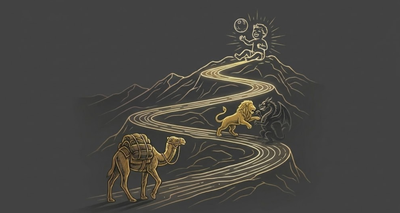
Nietzsche's Three Metamorphoses: How to Evolve Your Career (and Soul)
Why do we get stuck in our careers? Nietzsche's famous allegory of the Camel, the Lion, and the Child explains the three stages of professional and spiritual growth.
Lexicon: Kaizen (改善)
Stop looking for the "Silver Bullet." The Japanese concept of Kaizen teaches us that massive success is just the accumulation of tiny, boring improvements.
Lexicon: Weltschmerz
Why does the "Dream Job" always disappoint? The German concept of Weltschmerz explains the pain of realizing reality will never match your imagination.
The Porcupine Dilemma: The Art of Corporate Distance
Schopenhauer's famous parable of the freezing porcupines explains why "Company Culture" needs boundaries. Why too much collaboration kills productivity.
Lexicon: Techne (τέχνη)
We have too much 'Episteme' (Theory) and not enough 'Techne' (Craft). Why the ancient Greeks believed that true wisdom was found in the hands of the maker, not just the mind of the thinker.
Lexicon: Arete (ἀρετή)
It doesn't just mean "virtue." The Greek concept of Arete means fulfilling your specific purpose. Why a dull knife (and a misaligned employee) has no Arete.
The World as Will and Solitude: Life, Philosophy, and Legacy of Arthur Schopenhauer
"Life swings like a pendulum backward and forward between pain and boredom." From his rivalry with Hegel to his poodle Atma, discover the life of the Sage of Frankfurt and why his philosophy of the "Will" is the ultimate antidote to modern anxiety.
Lexicon: Dasein (Da-sein)
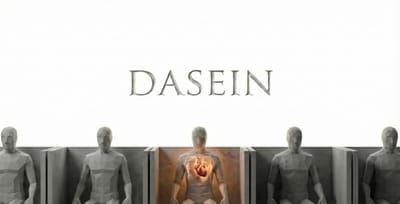
A comprehensive history of "Dasein." Tracing the concept from Heidegger's "Being and Time" to Sartre's "Bad Faith," and how it exposes the dehumanization of modern "Human Resources."
Lexicon: Ma (間)
Why your calendar needs more emptiness. The Japanese concept of Ma teaches us that the music happens in the silence between the notes.
Small Language Models: The Hedgehog, The Fox, and the End of the "God Model"
The era of the "God Model" (LLM) is ending. Isaiah Berlin's philosophy of the Hedgehog and the Fox explains why 2026 belongs to the specialized, local Small Language Model.
Lexicon: Aporia (ἀπορία)
Why feeling "stuck" is a sign of progress. The Greek concept of Aporia teaches us that admitting ignorance is the only path to true wisdom.
Lexicon: Kairos (καιρός)
The Greeks had two words for time. Chronos is the clock; Kairos is the opportunity. Why Anaxarchus believed timing was the true measure of wisdom.
The Will to Power (Why Founders Can't Stop)
Why "Enough" is never enough. Nietzsche's controversial concept explains the biological drive of the high-growth founder.
Lexicon: Sprezzatura
Stop bragging about how hard you work. The Renaissance concept of Sprezzatura teaches us that true mastery looks effortless.
Lexicon: Akrasia (ἀκρασία)
Why do we do what we know is wrong? The Greek concept of Akrasia explains the gap between Strategy (Knowing) and Execution (Doing).
Master vs. Slave Morality (The Ethics of Leadership)
Nietzsche’s most dangerous idea. Why "Good" and "Evil" are holding your company back, and why High Performers are often the victims of corporate "Ressentiment."
Lexicon: Wu Wei (無為)
Why "Hustle Culture" is inefficient. The Daoist concept of Wu Wei teaches us how to achieve more by doing less forcing.